Gumbo is more than a dish. It's a story of flavors, memories, and traditions passed down through generations.
The first time I had gumbo I was 15 years old in Baton Rouge. A friend's family made it and it was like nothing I'd ever tasted before. Coming from Tennessee where my idea of great food was dinner at the club with my grandparents — this was a revelation. Spicy, savory, and soulful. It tasted like cooking in full color.
Every family in Louisiana has their own version. Some follow recipes passed down for generations. Others improvise with whatever is on hand. That's the magic of gumbo — it's endlessly adaptable and fiercely personal.
My son Quin loves gumbo with basmati rice which adds a subtle floral touch. My Cuban friend Raul taught me to soak okra in vinegar to reduce its sliminess. Every experience has shaped how I make gumbo today.
Seasoning freshness is the most overlooked part of cooking. Most of what's in your cabinet was ground over a year ago — the flavor's already gone, and nothing on the jar tells you when it was made. Every Lucky Cajun bag is stamped with the date it was ground. Nobody else in the US does that. Browse the fresh ground cajun seasoning → Satisfaction guaranteed.
The Tomato Question — Read This Before You Start
Let's get this out of the way first.
If you put tomatoes in this gumbo you might lose some friends.
Cajun gumbo does not have tomatoes. That's not an opinion — it's a distinction that matters deeply to people who grew up making it. No tomatoes. No corn. No peas. No carrots. Those belong in vegetable soup, not gumbo.
Creole gumbo — the New Orleans urban tradition — sometimes includes tomatoes. That's a different dish with a different lineage and it's perfectly valid in its own right.
This is Cajun gumbo. No tomatoes. Don't do it.
The Roux — Don't Walk Away
The roux is everything in Cajun gumbo. It's not optional and it's not a shortcut step. Get the roux wrong and no amount of stock, seasoning, or protein saves the dish.
Corn oil is the traditional choice for Cajun roux — a higher smoke point than canola and a cleaner flavor that lets the flour do its job without competing. Use it.
Equal parts oil and flour. Medium-high heat. Constant stirring with a wooden spoon. The roux goes from blonde to peanut butter to milk chocolate to dark chocolate depending on how far you take it. A darker roux builds deeper more complex flavor but has less thickening power. A lighter roux thickens more but has less depth.
For this gumbo go to at least a peanut butter color. Dark chocolate if you're patient and confident.
Do not walk away from the roux. It goes from perfect to burned in under a minute and a burned roux cannot be saved. Start over.
Ingredients
The Roux:
- ¼ cup corn oil
- ¼ cup all-purpose flour
The Gumbo:
- 1 tablespoon fresh ground Lucky Cajun Black label
- 12 oz fresh or frozen okra, soaked in water and white vinegar
- 1 bell pepper, diced
- 1 small white onion, diced
- 1 large stalk of celery, diced
- 1 head of garlic, peeled and chopped
- 3 quarts chicken stock — low-sodium or homemade preferred
- 1 bay leaf
- 1 lb pulled chicken
- 1 lb andouille sausage, sliced
- Hot sauce to taste
- Cooked long-grain rice — basmati or jasmine
- Sliced scallions for garnish
Instructions
1. Make the Roux
Heat corn oil in a large heavy-bottomed pot over medium-high heat. Gradually whisk in flour and stir constantly with a wooden spoon. Keep stirring. Keep the heat steady. Watch the color change from white to blonde to peanut butter to chocolate.
This takes patience — anywhere from 20 to 40 minutes depending on how dark you want to go. Do not walk away. A burned roux means starting over.
2. Prepare the Okra
While the roux develops soak the okra in a mixture of water and white vinegar to reduce its natural sliminess. This technique — learned from Raul — makes a genuine difference in the final texture of the gumbo. Drain and rinse thoroughly before adding.
3. Cook the Trinity
Once the roux reaches your desired color add the diced bell pepper, onion, celery, and garlic. The vegetables will sizzle aggressively when they hit the hot roux — this is normal. Stir constantly for 5 to 7 minutes until the vegetables are softened and fragrant. The moisture from the vegetables helps cool the roux slightly and deglazes any fond from the bottom of the pot.
4. Add the Stock
Gradually stir in the chicken stock. Add it slowly while stirring to incorporate the roux evenly into the liquid without lumping.
If using pre-salted stock use fresh ground Lucky Cajun Salt-Free Original for seasoning so you don't compound the sodium. If using low-sodium or homemade stock use Lucky Cajun Black Label for the full Cajun flavor profile.
Add the bay leaf. Bring to a simmer and cook for 15 minutes.
5. Add the Proteins and Okra
Stir in the pulled chicken, sliced andouille sausage, and prepared okra. Lower the heat and simmer gently for 1 hour. This is where the gumbo comes together — the roux thickens the stock, the andouille fat renders into the broth, the okra softens, and every flavor melds into something greater than its parts.
Don't rush this hour.
6. Final Touches
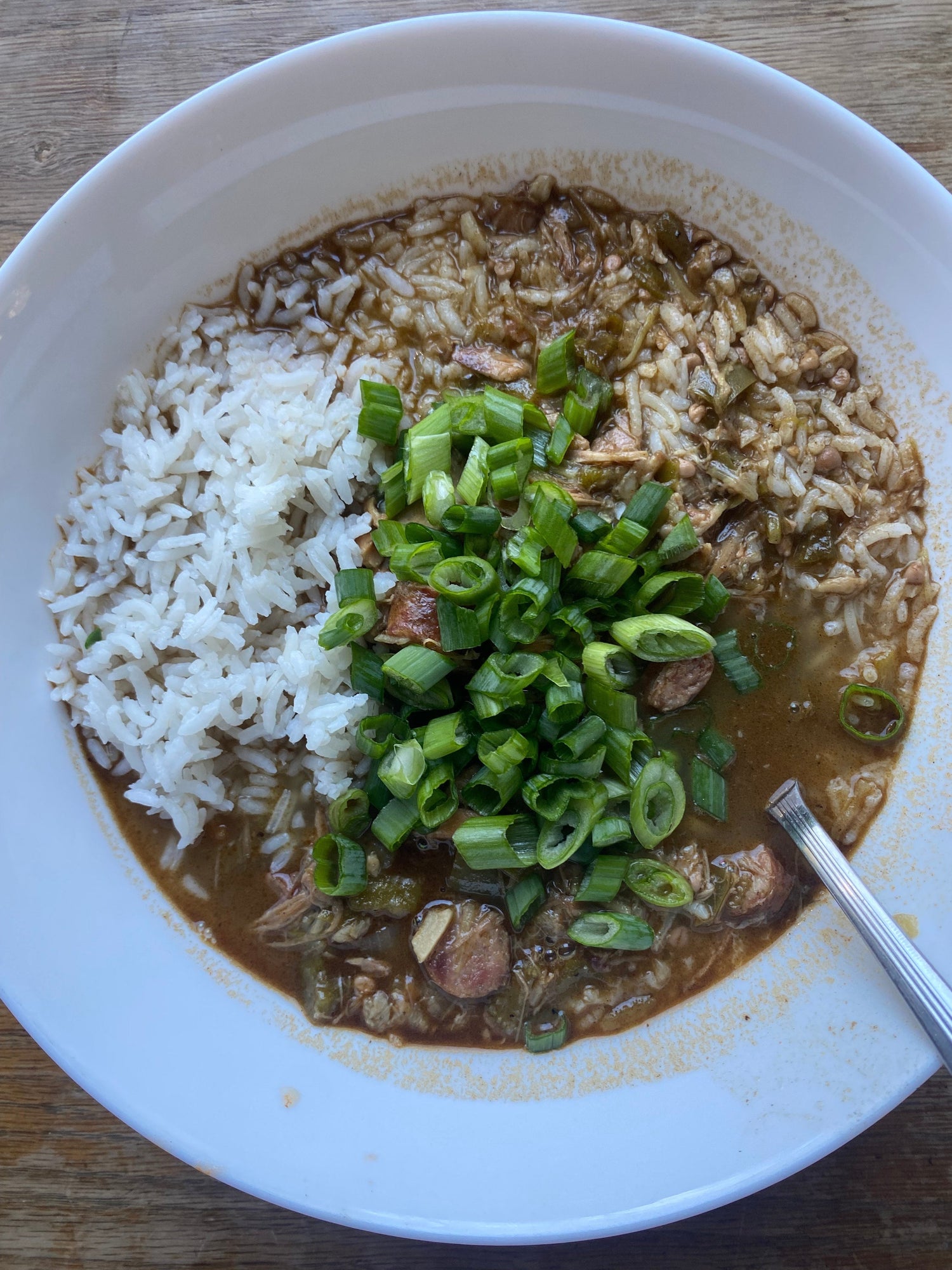
Taste and add hot sauce to preference. Remove the bay leaf. Serve over cooked long-grain rice and garnish with sliced scallions.
A Note on Rice
Basmati adds a subtle floral quality that complements the deep savory gumbo in a way that plain long-grain rice doesn't. Jasmine works equally well. Whatever you use — cook it separately and add it to the bowl at serving. Rice cooked in the gumbo absorbs too much liquid and throws off the consistency.
Proteins and Variations
Seafood gumbo: Substitute or add shrimp, crawfish, or catfish. For traditional Cajun gumbo avoid mixing seafood with chicken and sausage — keep them in their own pots. Use seafood stock instead of chicken stock.
Duck and andouille: Duck legs braised until the meat pulls from the bone, duck stock, andouille. One of the best versions of this dish.
Alligator gumbo: If you can source it alligator tail meat works beautifully in this recipe. Treat it like chicken.
Mushroom variation: Cremini and oyster mushrooms in place of meat for a vegetarian version that still has body and depth. Use vegetable stock and season generously with Black Label.
What Not to Put in Cajun Gumbo
Traditionalists are clear on this and they're right:
- No tomatoes — that's Creole gumbo, a different and equally valid dish
- No corn — this isn't chowder
- No peas — this isn't minestrone
- No carrots — this isn't pot roast
These ingredients aren't wrong. They're just wrong in this pot. Respect the tradition.
FAQ
What is the difference between Cajun gumbo and Creole gumbo?
Cajun gumbo has no tomatoes. Creole gumbo — the New Orleans urban tradition — sometimes includes them. Both are legitimate Louisiana dishes with their own distinct lineages. This recipe is Cajun gumbo. No tomatoes.
Why use corn oil for the roux?
Corn oil has a higher smoke point than canola or vegetable oil and a cleaner flavor that lets the flour develop properly without competing. It's the traditional choice for Cajun roux.
How dark should the roux be for gumbo?
At least a peanut butter color for this recipe. Dark chocolate if you want the deepest most complex flavor — but the darker the roux the less thickening power it has. Find your balance based on preference.
What does soaking okra in vinegar do?
The acid in the vinegar breaks down some of the mucilage — the natural sliminess of okra — before it goes into the pot. It produces a cleaner texture in the finished gumbo without sacrificing the thickening quality okra provides.
Can you put tomatoes in gumbo?
In Creole gumbo yes. In Cajun gumbo — no. And if you do it around the wrong people expect a conversation you weren't ready for.
What is the best Cajun seasoning for gumbo?
Lucky Cajun Black Label for low-sodium or homemade stock. Lucky Cajun Salt-Free Original when using pre-salted stock so you don't compound the sodium. Both are fresh ground sugar free Cajun seasoning without fillers that distribute evenly through the broth during the simmer.
Why simmer gumbo for a full hour after adding proteins?
The long simmer is where gumbo comes together. The roux finishes thickening the stock, the andouille fat renders into the broth, the okra softens, and every flavor melds into something deeper than its individual components. Rushing the simmer produces gumbo that tastes like its parts instead of like gumbo.
Can I make gumbo ahead of time?
Yes — gumbo is better the next day. The flavors deepen overnight as everything continues to meld. Reheat gently on the stovetop with a splash of stock if it has thickened too much.
What rice is best with gumbo?
Basmati or jasmine for a subtle floral quality that complements the deep savory broth. Cook separately and add to the bowl at serving — never cook rice in the gumbo itself.
Can I freeze gumbo?
Yes. Freeze without rice for up to 3 months. Thaw in the refrigerator overnight and reheat slowly on the stovetop. The roux may break slightly during freezing — whisk vigorously while reheating to bring it back together.
Why Lucky Cajun
A long simmered gumbo needs seasoning that holds up through an hour of cooking and distributes evenly through three quarts of stock. Fresh ground Black Label with volatile oils still active builds real Cajun depth through the entire broth. Processed blends sitting in a warehouse for months produce a flat stock that never develops the complexity gumbo deserves.
Every Lucky Cajun bag ships with a Born-On Date so you know the seasoning is still working when it goes into the roux.
🌶️ Shop Lucky Cajun Black Label
🌶️ Shop Lucky Cajun Salt-Free Original
🌶️ Shop the Best Sellers 4-Pack
Make the roux dark. Don't walk away. No tomatoes. Simmer for the full hour.
That's Cajun gumbo done right. 🌶️