The first time I had tri-tip, I was standing in front of a little grocery store in Sonoma County, the scent of hardwood smoke filling the air. This barbecue was different from what I knew back home in the South. We slow-smoke everything until it's falling apart, never a hint of pink unless you count the smoke ring. But in California, they cook it Santa Maria-style — hardwood, indirect heat, and a perfect medium-rare.
So we're going to cook it like they cook it. With a liberal dose of Lucky Cajun Black Label.
Why This Works
Tri-tip is a lean, triangular cut from the bottom sirloin, and it rewards a completely different approach than Southern low-and-slow barbecue. It doesn't have the fat to break down over ten hours — push it that far and it turns dry and gray. Santa Maria-style plays to its strengths instead: hardwood smoke for flavor, indirect heat to cook it evenly, and a pull at medium-rare so it stays juicy.
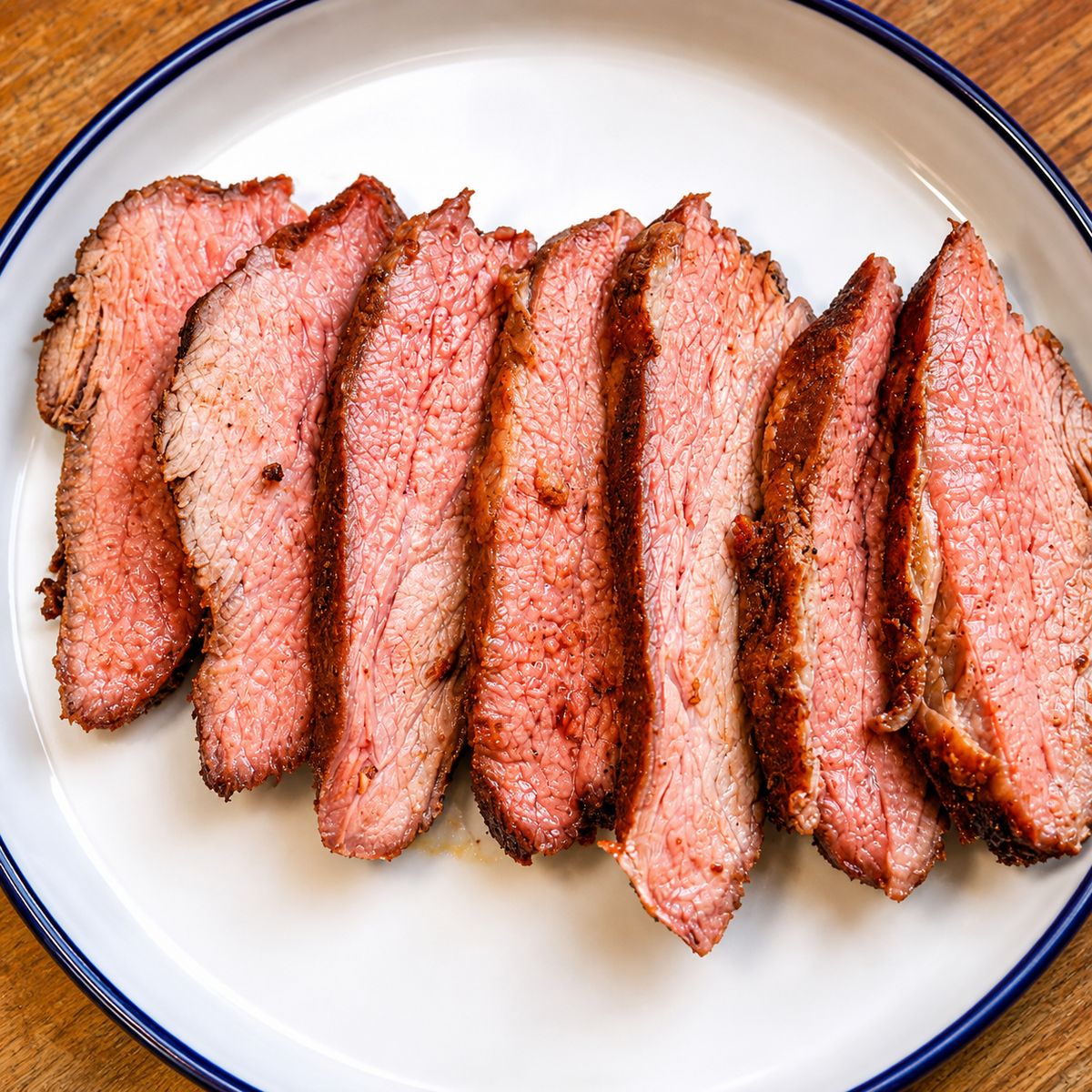
Two things make or break it. First, temperature — pull at 135°F internal and let carryover heat finish it. Second, the slice. Tri-tip has grain that runs in two directions, so you have to slice thinly against the grain or even a perfectly cooked roast eats tough. That step is non-negotiable.
Season it boldly. A lean cut like this can carry a heavy hand of fresh ground Black Label, and the seasoning forms a savory crust against the hardwood smoke.
Seasoning freshness is the most overlooked part of cooking. Most of what's in your cabinet was ground over a year ago — the flavor's already gone, and nothing on the jar tells you when it was made. Every Lucky Cajun bag is stamped with the date it was ground. Nobody else in the US does that. Browse our fresh ground blends → Satisfaction guaranteed.
How to Cook It
Season liberally with fresh ground Lucky Cajun Black Label, then cook by whatever method you've got:
Smoker: Set to 200°F, indirect heat. Pull at 135°F internal.
Kettle or barrel grill: Set up for indirect heat at 200°F using hardwood charcoal, adding wood chunks along the way. Pull at 135°F.
Hot coals: Tri-tip's lower fat content makes it less prone to flare-ups. Grill direct, still pull at 135°F.
No grill: Broil in the oven to the same target temperature.
However you cook it — rest at least 15 minutes before slicing, and slice thinly against the grain. That step is non-negotiable.
Homemade Barbecue Sauce
This sauce is the reason the tri-tip cluster in our search data keeps growing. Sweet, spicy, smoky, and built around Dr Pepper and Taco Tuesday seasoning — which sounds wrong until you taste it.
Ingredients:
- 16 oz Dr Pepper
- 2 tbsp fresh ground Lucky Cajun Taco Tuesday seasoning
- 10 oz ketchup
- ¼ cup brown sugar
- ½ tsp cloves
- 1 to 3 chipotle peppers, chopped fine or pureed depending on heat preference
- 3 tbsp apple cider vinegar
- 1 bay leaf
Instructions: Add everything to a pot and simmer until it reaches your desired thickness. Thin is better here — it makes a great basting sauce while the meat cooks and a dipping sauce at the table.
Want to take it further? Mix in some of the horseradish sauce from our boudin stuffed mushrooms recipe. That's the move.
How to Serve It
Tri-tip is one of the most versatile cuts you can cook. Serve it as a steak dinner with a loaded baked potato and a grilled veggie kabob. Pile it onto tacos. Slice it for salads and wraps. Layer it into sandwiches, hot or cold.
It's also leaner than brisket, pork shoulder, or burgers — which makes it a legitimate meal prep option. Cold out of the fridge the next day, it's just as good. Maybe better.
FAQ
What is tri-tip?
Tri-tip is a lean, triangular cut from the bottom sirloin. It's popular in California, where it's the star of Santa Maria-style barbecue, but less common in the South. It's flavorful, relatively affordable, and best cooked to medium-rare rather than slow-smoked to falling apart.
What temperature do you cook tri-tip to?
Pull it at 135°F internal for a perfect medium-rare after carryover heat. Tri-tip is lean, so cooking it past medium dries it out fast. Use a thermometer and pull early — the resting period finishes the cook.
Why do you slice tri-tip against the grain?
Tri-tip has grain running in two different directions, so slicing against the grain is critical — cut with the grain and even a perfectly cooked roast eats tough and chewy. Find the grain, slice thinly across it, and adjust your angle as the direction changes.
How long should tri-tip rest?
At least 15 minutes before slicing. Resting lets the juices redistribute through the meat instead of spilling onto the board. Skipping the rest is how a juicy roast ends up dry on the plate.
Can I cook tri-tip without a smoker or grill?
Yes. Broil it in the oven to the same 135°F target. You'll miss the hardwood smoke, but a bold crust of fresh ground Black Label and a proper rest and slice still deliver an excellent roast.
What is Santa Maria-style barbecue?
A California tradition of cooking beef — classically tri-tip — over hardwood (traditionally red oak) at indirect heat to a juicy medium-rare. It's the opposite of Southern low-and-slow: shorter cook, more pink, hardwood smoke for flavor.
Is tri-tip good for meal prep?
Excellent. It's leaner than brisket, pork shoulder, or burgers, and it holds up beautifully in the fridge. Cold the next day it's just as good in tacos, salads, wraps, and sandwiches — maybe better.
Why Lucky Cajun
Lucky Cajun Black Label is fresh ground weekly in Tennessee with a Born-On Date on every pouch. On a lean cut like tri-tip, the seasoning does real work — it forms the savory crust against the hardwood smoke, and fresh ground spice with its volatile oils intact builds a bolder, more aromatic bark than seasoning that's sat in a warehouse for a year. Fresh ground is the difference between a crust with flavor and one that's just brown.
🌶️ Shop Lucky Cajun Black Label
🌶️ Shop Lucky Cajun Taco Tuesday
🌶️ Shop the Best Sellers 4-Pack
Season bold. Hardwood smoke, indirect heat. Pull at 135°F. Rest 15 minutes. Slice thin against the grain.
That's Santa Maria-style tri-tip done right. 🌶️