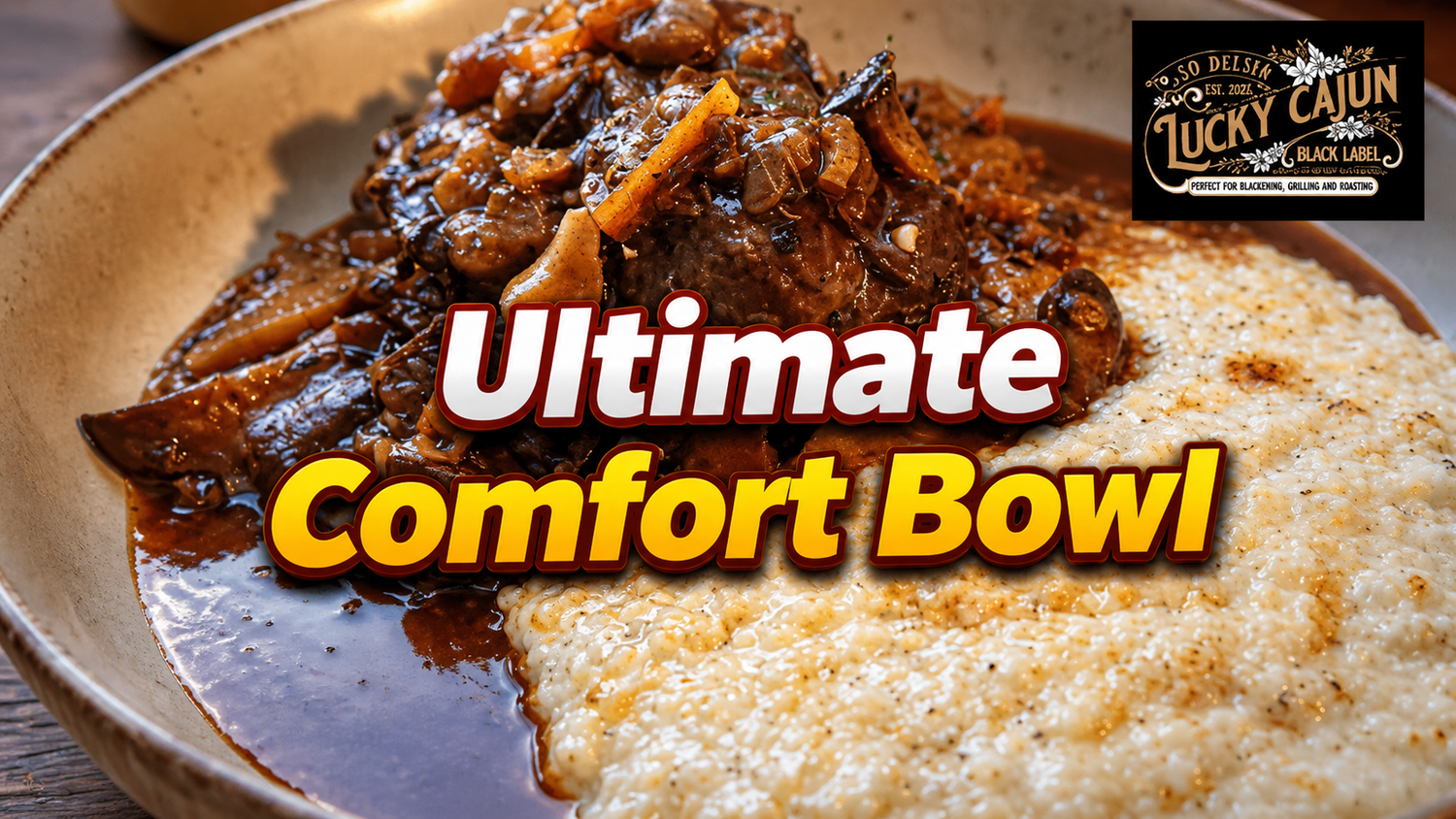
Tough shanks, thin sauce, and braises that taste flat instead of deep — this dish solves all three.
The real key here isn't a secret ingredient. It's time, patience, and respecting every step in the right order. Rush any part of this and the result is chewy meat and watery sauce. Do it right and you get fall-off-the-bone tenderness in a thick, glossy, couch-worthy braise.
This is Italian braised beef shank technique with a fresh ground Cajun soul — over creamy stone-ground grits instead of risotto. This works with beef, veal, pork, or lamb shank.
Problems This Solves
- Tough, chewy shank meat
- Thin, watery braising sauce
- Braises that taste muddy instead of layered
- Comfort food that lacks real depth
Why This Works
Shank meat is built for slow cooking. The collagen that makes it tough when cooked fast melts into a rich, silky sauce over low heat. Rushing this process produces chewy meat and a thin braise that never comes together.
Rendering the bacon first builds a smoky fat base that carries flavor through every layer. Layering the aromatics — carrot, onion, celery, mushrooms — builds depth instead of the flat, muddy flavor that shortcuts produce.
Fresh ground seasoning is what makes a 3-hour braise worth the wait. Crack open Lucky Cajun Black Beard's Smoke and it hits you immediately — smoked habanero and chipotle, sharp and alive. A long, slow cook is unforgiving on stale seasoning; if the volatile oils are already gone before it hits the pot, three hours of heat won't bring anything back. Fresh ground holds its depth through the entire braise instead of fading into the background by hour two.
Time is the technique here. Let it work.
Ingredients
Shanks:
- 4 pieces osso buco (shank steaks)
- Fresh ground Lucky Cajun Black Beard's Smoke seasoning
- 3 oz hardwood-smoked bacon ends
- 1 medium carrot, sliced into half-moons
- 1 medium onion, diced
- 1 celery stalk, sliced
- ½ lb fresh mushrooms (no slimy mushrooms)
- 1 bay leaf
- Fresh parsley
- Thyme sprigs
- Rosemary sprigs
- 4 cups homemade chicken stock, warmed
- 4 oz white wine
- 1 tablespoon tomato paste or ¼ cup ketchup
- 2 tablespoons flour
- Butter or oil if extra fat is needed
Creamy Stone-Ground Grits:
- 3 cups whole milk
- 1 cup stone-ground grits
Instructions
1. Render the Bacon
Render bacon ends in a heavy-bottomed pot until crispy and all fat has released. Remove the bacon and reserve the fat in the pan. That fat is your flavor base for everything that follows.
2. Season and Sear the Shanks
Season shanks generously with fresh ground Black Beard's Smoke — you'll catch the smoke and heat lifting off the meat before it even hits the fat. Sear both sides in the bacon fat until deeply browned. Use a pot around one-gallon size — not oversized. A pot too large spreads the liquid too thin and produces a flat, watery braise.
Once browned remove shanks and set aside.
3. Sweat the Vegetables
Add carrot, onion, celery, and mushrooms to the same pan. Season lightly with salt. Sweat until softened — cooked but not caramelized. You're building flavor, not color here.
4. Build the Braising Base
Add more cooking fat if needed. Stir in tomato paste or ketchup and cook briefly. Add flour and stir to coat everything evenly. Pour in white wine and stir to combine. Add warmed chicken stock and bring to a gentle simmer.
5. Braise the Shanks
Return shanks to the liquid. Add bay leaf and herb sprigs — tie them together or toss them in loose. Cover with lid. Cook at 375°F for about 3 hours. Let time do the work.
6. Check for Doneness
Poke with a fork. Tug gently — if the bone loosens easily it's ready. Remove herbs. Taste and adjust seasoning.
7. Fix the Sauce Texture
If the sauce is too thin, return to the oven uncovered to reduce. If too thick, loosen with a little warm stock. You want a thick, glossy, rich sauce that coats the back of a spoon.
8. Make the Stone-Ground Grits
Simmer 3 cups whole milk in a pot. Stir in 1 cup stone-ground grits. Cook at a gentle simmer, stirring frequently with a flat-tip wooden spoon so the grits don't stick to the bottom. Once they burn they're burned — there's no fixing it. Keep your attention on them while the shanks finish.
9. Serve
Spoon tender shanks and rich sauce over the grits. Finish with chopped fresh parsley. Serve warm and settle in — this is a couch-worthy meal.
Can I Make This in a Slow Cooker?
Yes. Sear the shanks and render the bacon on the stovetop first — that step matters too much to skip — then transfer everything to a slow cooker with the vegetables, wine, and warmed stock. Cook on low for 7 to 8 hours, or on high for 4 to 5, until the meat pulls easily from the bone. Finish the sauce on the stovetop afterward if it needs reducing, since a slow cooker won't thicken it the way an uncovered oven finish will.
Variations With Other Lucky Cajun Blends
Classic Cajun version: Swap Black Beard's Smoke for Lucky Cajun Black Label for a cleaner, more traditional Cajun braise with less smoke and more aromatic depth.
Spicier version: Add a few pinches of Lucky Cajun Voodoo to the braising liquid for a subtle habanero heat that cuts through the richness of the sauce.
Salt-free version: Use Lucky Cajun Salt-Free Original in place of Black Beard's Smoke for a lower sodium braise without losing the fresh-ground flavor depth.
FAQ
What is beef shank?
A cut from the leg of the cow, full of collagen and connective tissue that makes it tough when cooked quickly but transforms into rich, silky tenderness with long, slow braising. It's an affordable cut that rewards patience.
What is the difference between osso buco and braised beef shank?
Osso buco is traditionally made with veal shank and is Italian in origin — the name means "bone with a hole," referring to the marrow at the center. Braised beef shank uses the same technique and cut style but with beef, which is bolder in flavor, more affordable, and generally needs a slightly longer cook time.
Can I make beef shank in a slow cooker?
Yes. Sear the shanks and render the bacon on the stove first for real flavor, then transfer to a slow cooker with the vegetables and liquid. Cook on low 7 to 8 hours or high 4 to 5 hours until the meat pulls easily from the bone.
How long does beef shank take to cook?
About 3 hours at 375°F in the oven, or 7 to 8 hours on low in a slow cooker. The meat is ready when it's fork-tender and the bone loosens with a gentle tug — not on a fixed clock, but when it actually gets there.
What wine is best for braising beef shank?
A dry white wine works well here and keeps the braise from turning too heavy or sweet. If you prefer a red braise, a medium-bodied dry red also works — either way, use something you'd actually drink, since the flavor concentrates as it reduces.
What are creamy grits and how do you make them?
Stone-ground corn simmered slowly in whole milk until soft and creamy, stirred frequently so they don't stick and scorch on the bottom. Three cups of milk to one cup of stone-ground grits, cooked low and slow with constant attention, is the base ratio here.
Can I substitute risotto for grits?
Yes, if you'd rather lean fully Italian. A classic Parmesan risotto pairs beautifully with the braised shank and sauce. Stone-ground grits bring the Southern half of this dish's identity, so swapping them changes the character — but either base works with the braise.
What does braised beef shank taste like?
Deep, rich, and savory — smoky from the bacon and Black Beard's Smoke, layered with sweet caramelized vegetables and a glossy wine-and-stock sauce. The meat itself turns silky and almost spoonable after hours of slow cooking.
What makes beef shank fall off the bone?
Time at low, steady heat. The collagen and connective tissue in the shank need hours to break down into gelatin, which is what makes the meat tender and gives the sauce its rich, glossy body. Rushing the cook leaves that collagen tough and chewy instead.
How do you know when beef shank is done?
Poke it with a fork and give it a gentle tug — if the meat pulls easily and the bone loosens without resistance, it's ready. If there's still resistance, it needs more time, not more heat.
Why is my braised shank tough?
Either the cooking time was too short or the heat was too high. Shank meat needs long, gentle heat to break down the collagen that makes it tough. Low and slow at 375°F for 3 hours is the minimum.
Can you use beef shanks instead of veal for osso buco?
Yes. Beef shanks work well and are often more accessible and affordable. The flavor is bolder and the cook time may be slightly longer.
Why render bacon first for braising?
Rendered bacon fat builds a smoky, rich flavor base that carries through every layer of the braise. Starting the sear in bacon fat builds more complexity than butter or oil alone.
Why warm the stock before adding it?
Adding cold stock to a hot pan drops the temperature and interrupts the cooking process. Warm stock keeps the braise moving and prevents the sauce from going flat.
What size pot is best for braising shanks?
A pot around one gallon is ideal. Too large and the braising liquid spreads too thin, producing a watery sauce that never develops proper body.
How do you fix a thin braising sauce?
Return the pot to the oven uncovered and let it reduce until thick and glossy. Don't add more flour — reduction builds a cleaner, richer sauce.
What are stone-ground grits?
Stone-ground grits are whole kernel corn ground between stones rather than processed into fine powder. They take longer to cook but have a more complex, nutty flavor and better texture than instant grits.
Why do grits burn so easily?
Grits settle to the bottom of the pot and scorch quickly without constant attention. Use a flat-tip wooden spoon and stir frequently. Once they burn there's no saving them.
What seasoning works best for braised shanks?
A fresh ground blend with smoke, heat, and depth works best for braises. Lucky Cajun Black Beard's Smoke is built for this — smoked habanero and chipotle hold up through a 3-hour cook without going flat.
Why Lucky Cajun
Most seasonings lose their punch in a long braise. Fresh ground blends with volatile oils that are still alive when they hit the pan hold up through hours of slow cooking — the smoke and heat in Black Beard's Smoke actually deepens as it simmers instead of fading out. Every Lucky Cajun bag ships with a Born-On Date so you know the seasoning is still working when it matters.
🌶️ Shop Lucky Cajun Black Beard's Smoke
🌶️ Shop Lucky Cajun Black Label
Shanks need time, not rushing. Build flavor in layers. Let slow heat turn tough meat into silk. 🌶️