Most dry pork chops fail for one reason: people check the temperature too late.
Pork dries fast and the juicy window is small. Miss it by a few degrees and it goes from tender and buttery to tough and gray in less time than it takes to set the table. It's not a flavor problem — it's a timing problem. And the fix is simpler than most people think: high heat, bold seasoning, temp early.
Why This Works
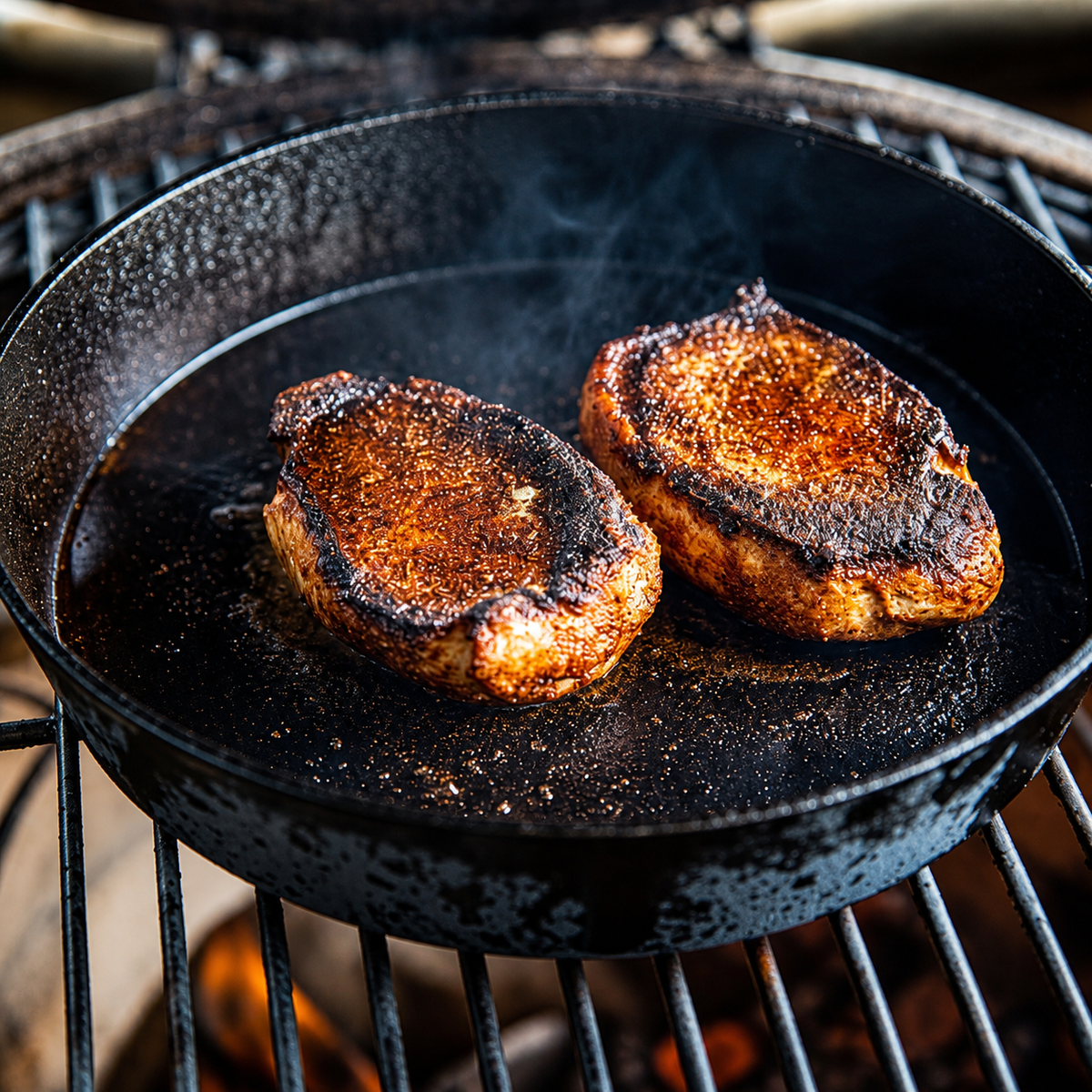
Cast iron delivers strong, even, sustained heat that doesn't drop when cold meat hits the surface. That consistent heat creates the blackened crust — the dark, aromatic bark that seals in moisture and carries the seasoning deep into the meat. You can't fake it with a stainless pan and you can't rush it on medium heat. Get the pan screaming hot, season boldly, and don't move the chop until the crust forms.
The fat cap is where most cooks go wrong. Stand the pork chop fat-side down in the hot cast iron for 1 to 2 minutes before you sear the flat sides. The fat renders out, coats the pan, and gives you a natural cooking fat more flavorful than butter or oil — and it bastes the meat as it sears. That's where the richness comes from. If your chops are lean, add a pat of butter instead, but seek out thick bone-in chops with the fat cap intact.
Then temp early. That's the whole game. Time is a guide, temperature is the truth.
Seasoning freshness is the most overlooked part of cooking. Most of what's in your cabinet was ground over a year ago — the flavor's already gone, and nothing on the jar tells you when it was made. Every Lucky Cajun bag is stamped with the date it was ground. Nobody else in the US does that. Browse our fresh ground blends → Satisfaction guaranteed.
Ingredients
- 2 thick-cut bone-in pork chops, 1.5 to 2 inches thick, fat cap intact
- 2 tablespoons fresh ground Lucky Cajun Black Label seasoning
- Optional: 1 teaspoon fresh ground Blackening Blend for extra heat
- 1 tablespoon butter if chops lack a fat cap
Instructions
1. Season
Pat the pork chops completely dry — moisture prevents crust formation. Rub both sides generously with Black Label, pressing the spices into the meat. Add Voodoo or Datil if you want heat on top of the Cajun base.
2. Render the Fat
Heat cast iron over medium-high for 5 minutes. Stand the chops fat-side down and render for 1 to 2 minutes until the fat sizzles and releases. Tilt the pan to help it along.
3. Sear
Lay the chops flat and sear each side 3 to 4 minutes over medium-high. Do not move them — let the crust form.
4. Temp Early
This is the critical step. Most people temp too late. Start checking at 6 to 7 minutes total cook time, then check every 30 to 45 seconds. Pull at 135 to 140°F. The chop continues cooking as it rests to 140 to 145°F. Slight pink in the center is juicy and correct. Gray means overcooked.
5. Rest
Rest 5 minutes minimum. The juices reabsorb into the meat instead of running out onto the board. Do not skip this.
Don't Waste the Pan
After the pork chops come out, the cast iron is loaded with rendered fat, browned bits, and seasoning. Sauté sliced onions or mushrooms in the same pan. Deglaze with a splash of white wine, add a little stock, and let it simmer into a quick pan sauce. Fast, easy, and it turns a great pork chop into a restaurant-level plate.
FAQ
Why do pork chops come out dry?
Almost always because they're checked for temperature too late. Pork has a small juicy window and overcooks fast. Start temping at 6 to 7 minutes and pull at 135 to 140°F — carryover heat finishes it to a juicy 140 to 145°F as it rests.
Is a little pink in pork chops safe?
Yes. Pork is safe at 145°F, and a slight pink center at that temperature is juicy and correct. Gray all the way through means it's overcooked. The USDA lowered the safe pork temperature to 145°F years ago.
Why use cast iron for pork chops?
Cast iron holds strong, even heat that doesn't drop when cold meat hits it. That sustained heat forms the blackened crust that seals in moisture and carries the seasoning. Stainless drops temperature and medium heat won't build the same bark.
What is the fat cap and why does it matter?
The fat cap is the strip of fat along the edge of a bone-in chop. Rendered fat-side down first, it becomes a flavorful cooking fat that bastes the meat and adds richness. Lean chops without a fat cap need a pat of butter to compensate.
How thick should pork chops be for blackening?
1.5 to 2 inches thick, bone-in. Thick chops give you enough margin to build a hard-seared crust without overcooking the interior. Thin chops cook through before the crust forms and dry out fast.
Why rest pork chops after cooking?
Resting 5 minutes lets the juices reabsorb into the meat instead of spilling onto the cutting board. Skipping the rest is how a perfectly cooked chop still ends up dry on the plate.
What seasoning is best for blackened pork chops?
Fresh ground Lucky Cajun Black Label for the classic Cajun base, with Voodoo or Datil layered on top if you want heat. Fresh ground seasoning builds a deeper, more aromatic crust than blends that have sat in a warehouse for a year.
Why Lucky Cajun
Black Label, Voodoo, and Datil are all fresh ground weekly in Tennessee with a Born-On Date on every pouch. Blackening is where freshness matters most — the seasoning forms the entire crust, and fresh ground spice with its volatile oils still active chars into a deep, complex bark instead of a flat scorched one. Stale warehouse seasoning just burns. Fresh ground chars into flavor.
🌶️ Shop Lucky Cajun Black Label
🌶️ Shop Lucky Cajun Voodoo
🌶️ Shop Lucky Cajun Datil
Screaming-hot cast iron. Render the fat cap. Sear hard. Temp early. Rest.
That's thick-cut blackened pork chops done right. 🌶️