
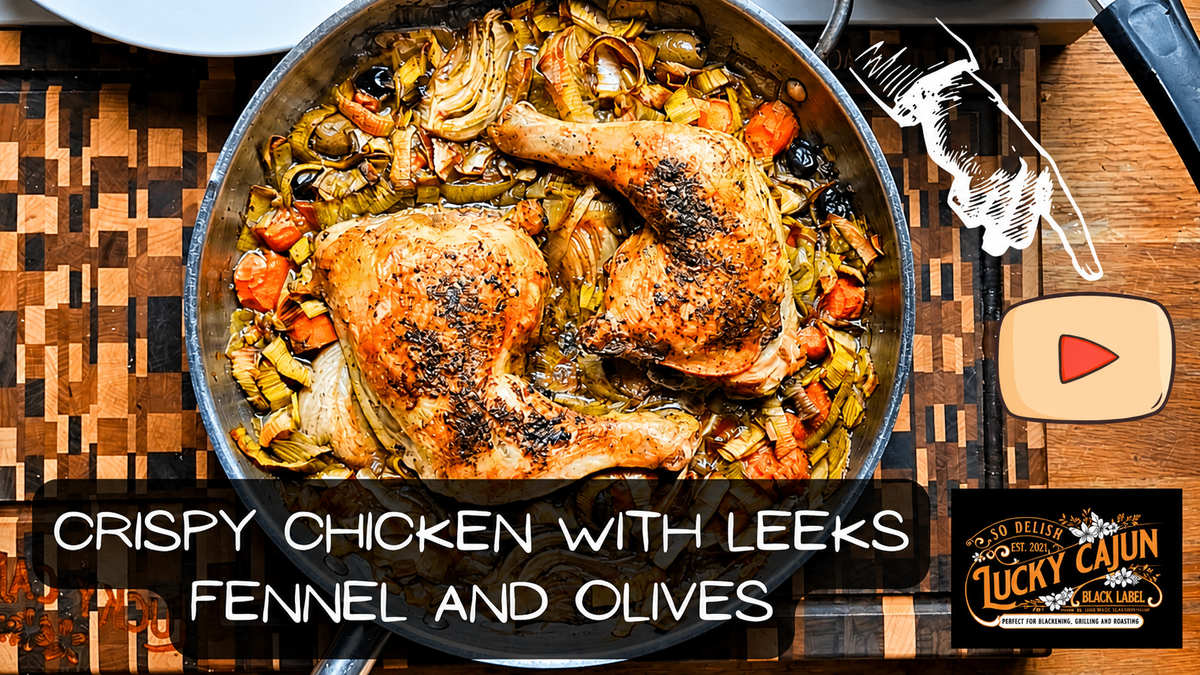
This is the kind of dish that looks like you spent all day on it but comes together in one pan with minimal effort.
Crispy skin, tender braised chicken, caramelized fennel, sweet leeks, kalamata olives, and blood orange juice all building on each other in the same pan. Lucky Cajun Greek Out seasons both the chicken and the braising liquid so the flavor runs all the way through — alive when it hits the pan, still alive an hour later when it comes out of the oven.
You can have crispy and braised.
One pan. One hour in the oven. Serious result.
The greatest cooking hack nobody talks about is changing what you season with. Fresh ground seasoning with volatile oils still alive blooms the second it hits heat — the aroma fills the kitchen before the dish is even halfway done, and the flavor you smell is the flavor you taste. Change one thing and everything changes.
Why This Works
Searing the chicken skin-side down first is non-negotiable. That initial sear in the sauté pan renders the fat and sets the skin so it stays crispy through an hour of oven braising. Chicken that goes into the oven without a proper sear comes out with soft pale skin no matter how hot the oven is.
The vegetables go into the same pan in the right order — carrots and fennel need more time to brown, leeks sweat quickly and go in after. Each vegetable picks up the rendered chicken fat and seasoning from the pan as it cooks.
Blood orange juice and zest add a citrus brightness that balances the richness of the chicken skin and the brininess of the kalamata olives. It's the component that makes the braising liquid worth spooning over everything at the table.
Greek Out in the braising liquid is what ties the whole dish together. The fresh ground Mediterranean herbs are alive — you can smell them the moment they hit the hot stock, and that aroma is the flavor blooming into every vegetable and piece of chicken through the hour-long braise. Store-bought Greek seasoning ground months ago produces a flat braising liquid. Fresh ground Greek Out builds real depth you can feel on your tongue from the first bite.
Placing the chicken skin-side up on top of the vegetable stew for the oven phase is the final key. The skin stays above the liquid and crisps under direct oven heat while the chicken braises from below. The result is crispy skin on a braised chicken — something most recipes can't pull off.
Ingredients
2 chicken leg quarters
3 medium carrots, peeled and cut into ½-inch pieces
1 large leek, split, cut, and rinsed
1 fennel bulb, cut into 8 wedges
15 kalamata olives, pitted
Zest and juice of 2 blood oranges
1½ cups chicken stock
Extra virgin olive oil for cooking
2 tablespoons Lucky Cajun Greek Out seasoning
Instructions
1. Season the Chicken
Season chicken leg quarters with 1 tablespoon of Lucky Cajun Greek Out. Make sure the seasoning gets under the skin where possible — that's where the flavor penetrates the meat during the braise. Fresh ground herbs under the skin bloom during the sear and you'll smell it the second the chicken hits the pan.
2. Sear the Chicken
Heat a large oven-safe sauté pan over medium heat and add olive oil. Once hot sear the chicken skin-side down until the skin is deeply golden and crispy. Do not rush this step. The skin needs to render properly before anything else goes in the pan.
3. Brown the Carrots and Fennel
Add carrots and fennel wedges to the pan around the chicken. Sauté until they begin to brown slightly and pick up the rendered chicken fat and seasoning from the pan.
4. Sweat the Leeks
Add the leeks and sweat them, stirring frequently, until softened. Leeks cook faster than carrots and fennel — adding them after prevents them from going mushy before the other vegetables have color.
5. Add the Citrus and Olives
Stir in blood orange zest, blood orange juice, and kalamata olives. The citrus deglazes the pan and picks up all the fond from the sear and the vegetable cooking. This is where the braising liquid starts to come together.
6. Add Stock and Seasoning
Pour in chicken stock and add the remaining 1 tablespoon of Lucky Cajun Greek Out. Stir to combine. The second addition of seasoning goes directly into the braising liquid — alive, fresh ground, blooming into every drop of stock so it infuses through the entire dish during the oven braise.
7. Bring to a Boil
Bring everything to a boil on the stovetop. Place the chicken skin-side up on top of the vegetable stew so the skin stays above the liquid level.
8. Braise in the Oven
Transfer to a 400°F oven on the top rack for 1 hour until the chicken is tender and the skin is crispy. The top rack position keeps the skin under direct heat so it continues crisping while the chicken braises from below.
9. Taste and Serve
Taste before seasoning — the kalamata olives add significant salt to the braising liquid. Serve over polenta, mashed potatoes, or with toasted bread to soak up the liquid.
Serving Suggestions
This recipe serves 2 generously or 4 in smaller portions. The braising liquid is the best part — spoon it over everything at the table. Polenta is the ideal base because it absorbs the blood orange and Greek Out braising liquid perfectly. Mashed potatoes and toasted crusty bread both work equally well.
Variations With Other Lucky Cajun Blends
Cajun version: Swap Greek Out for Lucky Cajun Black Label for a bolder smokier braise that pairs differently with the fennel and blood orange. Less Mediterranean, more Louisiana.
Spicier version: Add a pinch of Lucky Cajun Fiery Datil to the braising liquid alongside Greek Out. The fruity citrus heat of Datil pairs naturally with blood orange and kalamata olives.
Salt-free version: Use Lucky Cajun Salt-Free Cajun in place of Greek Out and reduce the kalamata olives slightly for a lower sodium build without losing fresh ground herb depth.
Citrus swap: Regular navel or Valencia oranges work if blood oranges aren't available. The flavor is slightly less complex but the same technique applies.
FAQ
What is a good Mediterranean chicken recipe?
This crispy braised chicken leg quarters recipe is a complete one-pan Mediterranean chicken dinner — seared skin, leeks, fennel, kalamata olives, and blood orange, all seasoned with fresh ground Greek Out. One hour in the oven, serious flavor.
What seasoning is best for Mediterranean chicken?
A fresh ground Mediterranean herb blend built on oregano, marjoram, dill, and lemon. Lucky Cajun Greek Out is used twice in this recipe — on the chicken before searing and in the braising liquid — so the flavor carries all the way through. The aroma when it hits the hot pan tells you immediately that something different is happening.
Can this be made as a one-pan Mediterranean chicken dinner?
Yes — that's exactly what this is. Everything cooks in a single oven-safe sauté pan: sear the chicken, build the vegetables, deglaze with citrus, then braise in the oven. One pan, one hour.
Is this recipe good for Mediterranean diet chicken thighs too?
Yes. Bone-in chicken thighs work with the same method and timing as leg quarters — sear skin-side down, braise with the vegetables and citrus, and place skin-side up for the oven. A great option if leg quarters aren't available.
What is a good braised chicken leg quarters recipe?
This one. Searing the skin first, then braising with leeks, fennel, olives, and blood orange juice, produces tender meat and crispy skin at the same time — something most braised chicken recipes can't do.
What goes with chicken, fennel, and oranges?
Kalamata olives and leeks round out the braise, and polenta, mashed potatoes, or crusty bread are ideal for soaking up the blood orange braising liquid.
What is the best Cajun seasoning for braised chicken leg quarters?
A fresh ground sugar free Cajun seasoning that holds up through an hour of oven braising. Lucky Cajun Greek Out builds Mediterranean herb depth that infuses through the braising liquid and coats every vegetable and piece of chicken during the cook. Fresh ground means the volatile oils are still active — alive — when they hit the hot stock. Processed blends go flat long before the braise finishes.
Why sear chicken skin-side down before braising?
The sear renders the fat under the skin and sets the exterior so it stays crispy during the oven braise. Without this step the skin softens in the braising liquid and comes out pale and flabby regardless of oven temperature.
Why place the chicken skin-side up on top of the vegetables?
To keep the skin above the liquid level so it crisps under direct oven heat while the chicken braises from below. Submerging the chicken in the liquid produces tender meat but soft skin — this method gets both.
What does fennel taste like and can I substitute it?
Fennel has a mild anise flavor that softens significantly during braising. It pairs naturally with citrus and olives. If unavailable celery root or parsnips work as substitutes though the flavor profile changes.
Why add the leeks after the carrots and fennel?
Leeks cook faster and become mushy if they go in at the same time as harder vegetables. Adding them after the carrots and fennel have started to brown produces properly softened leeks that still have texture at the end of the braise.
Why taste before adding salt at the end?
Kalamata olives are significantly salty. The braising liquid absorbs that salt over an hour of cooking and may not need any additional seasoning at all. Always taste first.
What are blood oranges and can I substitute them?
Blood oranges are a citrus variety with a deep red interior and a slightly more complex flavor than regular oranges — berry-forward with the classic orange brightness. Navel or Valencia oranges work as substitutes with a slightly simpler flavor profile.
Can I make this recipe ahead of time?
Yes. The braised chicken actually improves overnight as the flavors deepen. Reheat gently on the stovetop with a splash of chicken stock. The skin won't be as crispy reheated but the flavor is excellent.
What polenta works best with this dish?
Stone-ground polenta cooked in chicken stock with butter and parmesan is the ideal base. The braising liquid from the chicken spoons over the top and soaks into the polenta. Instant polenta works in a pinch but lacks the texture and flavor of properly cooked stone-ground.
Is this recipe good for the best Cajun seasoning for chicken search?
Yes. This recipe demonstrates how fresh ground Cajun seasoning for chicken works in a braise — flavoring the skin during the sear and infusing through the braising liquid during the oven cook. Lucky Cajun Greek Out delivers the best Cajun seasoning for chicken in a Mediterranean-style braise specifically.
Why Lucky Cajun
An hour-long braise needs seasoning that holds up through the entire cook. Fresh ground Greek Out with volatile oils still active blooms into the chicken stock and coats every component through the braise. The flavor is alive — you can smell it, feel it on your tongue, and taste the difference from the first bite to the last spoonful of braising liquid. Processed blends sitting in a warehouse for months go flat before the first 20 minutes are done.
Every Lucky Cajun bag ships with a Born-On Date so you know the seasoning is still working when it goes into the pan.
🌶️ Shop Lucky Cajun Greek Out
🌶️ Shop Lucky Cajun Black Label
🌶️ Shop Lucky Cajun Fiery Datil
Sear the skin hard. Build the vegetables in order. Citrus and olives deglaze the pan. Chicken skin-side up on top. One hour at 400°F.
That's crispy braised chicken done right. You can have both. 🌶️