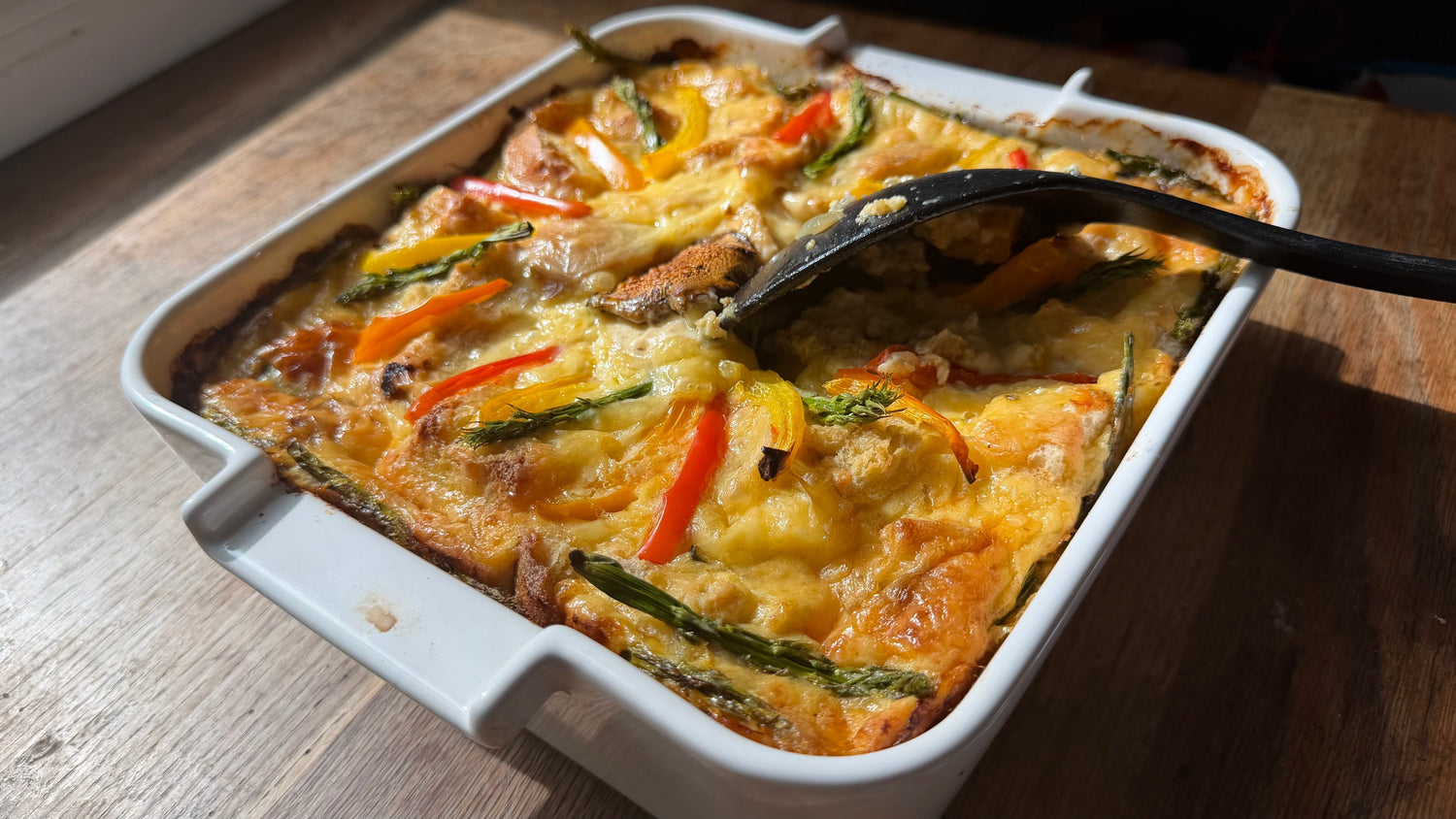
Most breakfast casseroles fail because they're either too wet, too dry, or under-seasoned.
This one works because the vegetables are cooked first so the casserole doesn't go watery, the bread is stale so it absorbs the custard properly, the custard itself is seasoned with fresh ground Lucky Cajun Black Label instead of just salt, and it rests before baking for even texture all the way through.
Simple. Forgiving. Perfect for Easter brunch or any morning you need to feed a crowd without overthinking it.
Why This Works
Most casserole failures come down to skipped steps, not bad ingredients.
Raw vegetables release water as they bake which turns the whole dish soggy. Cooking them down first solves that before it ever becomes a problem.
Fresh bread doesn't absorb custard properly — it just sits there wet on the outside and dry in the middle. Stale bread soaks evenly and holds its structure.
An unseasoned egg custard is the most common reason breakfast casseroles taste like nothing. Lucky Cajun Black Label in the custard itself — not just sprinkled on top — means every bite carries flavor, not just the surface.
And the rest before baking lets the bread fully absorb the custard so it bakes evenly instead of being mushy in spots and dry in others.
Seasoning freshness is the most overlooked part of a cooking. Most of what's in your cabinet was ground over a year ago — the flavor's already gone, and nothing on the jar tells you when it was made. Every Lucky Cajun bag is stamped with the date it was ground. Nobody else in the US does that. Browse our fresh ground blends→ Satisfaction guaranteed.
Ingredients
Base:
- 6 cups chopped vegetables — onion, peppers, mushrooms, asparagus, whatever you have
- Butter
- Fresh Ground Lucky Cajun Black Label seasoning
Optional Add-Ins:
- Bacon
- Ham
- Smoked salmon
Bread Layer:
- 6 cups stale baguette or white bread, cubed
Custard:
- 12 eggs
- 3 tablespoons Dijon mustard
- ¼ cup sour cream
- 1 tablespoon fresh ground Lucky Cajun Black Label seasoning
- 1 cup milk
- 1 cup heavy cream
Cheese:
- Any cheese you have on hand, shredded
Instructions
1. Cook the Vegetables
In a large pan melt butter and cook your chopped vegetables until softened. Season with Lucky Cajun Black Label. You're looking for cooked and flavorful — not raw, not watery. If using bacon or ham cook it now and add it to the pan.
2. Build the Custard
In a large bowl whisk together eggs, Dijon mustard, sour cream, and Lucky Cajun Black Label until smooth. Whisk in milk and heavy cream. This is where the seasoning actually flavors the whole dish — not just the top layer.
3. Assemble
In a casserole dish layer bread, vegetables, and cheese. Repeat if needed depending on the size of your dish.
Pour the custard evenly over the top. Press everything down lightly so the bread absorbs the liquid. Let it sit for 30 minutes so the custard fully soaks in — this step is what separates a properly textured casserole from a soggy mess.
Top with more cheese.
4. Bake
Bake at 350°F for 30 minutes covered. Uncover and bake another 15 to 20 minutes until set and golden on top. If using a deeper casserole dish add a few extra minutes as needed.
5. Rest — Don't Skip This
Let the casserole rest for 15 minutes before slicing. This sets the structure and keeps it from falling apart when you serve it. Cutting too soon undoes everything the resting step before baking accomplished.
What to Use — Flexible Ingredient Guide
This is where the recipe shines.
Use whatever you've got:
- Vegetables — peppers, spinach, zucchini, broccoli
- Protein — bacon, sausage, ham, smoked salmon
- Cheese — cheddar, mozzarella, Swiss, goat cheese
It's built to adapt to whatever is in your fridge.
Common Mistakes and Fixes
Why is my casserole watery?
Vegetables weren't cooked first. Always cook them down before assembling so they release their moisture in the pan instead of in the casserole dish.
Why is the center undercooked?
The casserole didn't rest long enough before baking, or it wasn't baked long enough. Deeper dishes need additional bake time to set fully in the middle.
Can I make this ahead of time?
Yes. Assemble it the night before, refrigerate, and bake the next morning. This is actually the better method for holiday mornings — less to do when guests arrive.
Variations With Other Lucky Cajun Blends
Spicier version: Add a pinch of fresh ground Lucky Cajun Voodoo to the custard alongside Black Label for layered habanero heat that builds through every bite.
Greek style: Swap Black Label for fresh ground Lucky Cajun Greek Out and use spinach, feta, and tomato as your vegetable and protein layer for a Mediterranean breakfast casserole.
Smoky version: Use fresh ground Lucky Cajun Black Beard's Smoke in place of Black Label for a deeper smokier custard that pairs especially well with bacon or smoked salmon.
Salt-free version: Use fresh ground Lucky Cajun Salt-Free Cajun for a lower sodium build without losing fresh ground depth — useful since cheese and bacon already add plenty of salt.
FAQ
Why is my breakfast casserole watery?
Raw vegetables release moisture as they bake. Cooking them down in a pan first removes that excess water before it ends up in your casserole.
Should bread be fresh or stale for breakfast casserole?
Stale bread absorbs custard evenly without falling apart. Fresh bread gets mushy on the outside while staying dry in the middle. If you only have fresh bread cube it and let it sit out for a few hours, or toast it lightly in the oven first.
What is the best Cajun seasoning for breakfast casserole?
A fresh ground sugar free Cajun seasoning without fillers built into the custard itself — not just sprinkled on top — gives every bite consistent flavor. Lucky Cajun Black Label is versatile enough to work with any vegetable or protein combination.
Why does my casserole need to rest before baking?
Resting lets the bread fully absorb the custard so it bakes evenly. Skipping this step produces uneven texture — soggy in some spots and dry in others.
Why does my casserole need to rest after baking too?
Resting after baking allows the structure to set. Cutting into it immediately causes it to fall apart instead of holding clean slices.
Can I make breakfast casserole the night before?
Yes. Assemble completely, cover, and refrigerate overnight. Bake the next morning straight from the fridge — you may need a few extra minutes of bake time since it's starting cold.
What vegetables work best in a breakfast casserole?
Onion, peppers, mushrooms, asparagus, spinach, zucchini, and broccoli all work well. The key is cooking them down first regardless of which you choose.
Can I freeze breakfast casserole?
Yes, though texture is best fresh. Assemble and freeze unbaked, then thaw completely in the refrigerator before baking as directed.
What cheese works best for this recipe?
Cheddar, mozzarella, Swiss, or goat cheese all work depending on the flavor direction. Sharp cheddar pairs especially well with the Black Label seasoning.
Is this recipe good for holiday brunches?
Yes — it's specifically built for that. Make ahead the night before, bake in the morning, and feed a crowd without last-minute stress. Perfect for Easter, Christmas, or any holiday brunch.
Why Lucky Cajun
Seasoning the custard itself instead of just the surface is what makes this casserole actually taste like something instead of just looking like breakfast. Fresh ground Black Label with volatile oils still alive in the bag builds flavor all the way through, not just on top.
Every Lucky Cajun bag ships with a Born-On Date so you know the seasoning is still working when it matters.
🌶️ Shop Lucky Cajun Black Label
🌶️ Shop Lucky Cajun Greek Out
🌶️ Shop the Best Sellers 4-Pack
Cook the vegetables first. Season the custard, not just the top. Rest before baking. Rest after baking.
That's how you turn random fridge ingredients into a brunch casserole that actually works every time. 🌶️