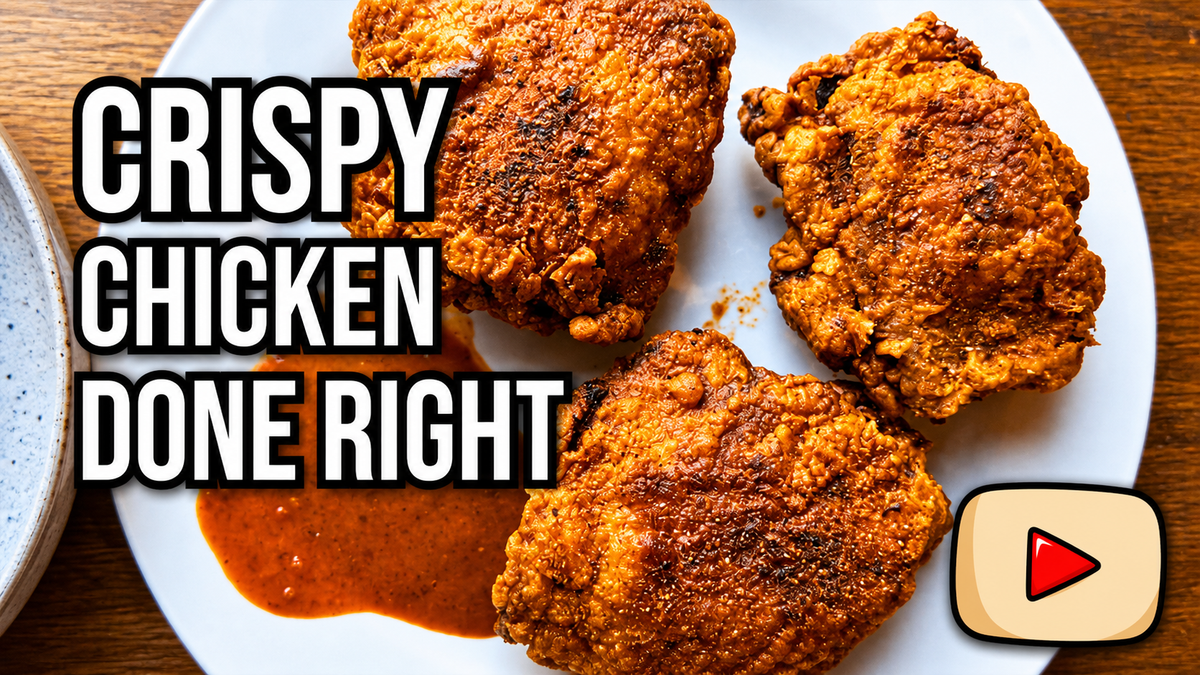
Crispy outside. Juicy inside. Properly seasoned all the way through.
If your fried chicken isn't crispy, the breading falls off, or the inside tastes bland — this method fixes it. The difference comes down to timing and heat. Build flavor into the chicken first, then control your oil so the crust sets clean and stays crisp.
This is the method that separates good fried chicken from forgettable fried chicken.
Seasoning freshness is the most overlooked part of a cooking. Most of what's in your cabinet was ground over a year ago — the flavor's already gone, and nothing on the jar tells you when it was made. Every Lucky Cajun bag is stamped with the date it was ground. Nobody else in the US does that. Browse our fresh ground blends→ Satisfaction guaranteed.
Ingredients
- 2 pounds chicken, any cut
- ½ cup pickle juice
- Buttermilk, enough to cover chicken
- 8 cups all-purpose flour
- 5 tablespoons fresh ground Lucky Cajun Black Label
- Oil for frying, enough for shallow or deep frying
Instructions
1. Season and Pickle Brine — Flavor Starts Here
Season chicken pieces liberally on all sides with Lucky Cajun Black Label. Pour ½ cup pickle juice over the chicken and mix to coat. Let sit 3 to 4 hours in a non-reactive bowl.
Do not skip this step. This is what builds flavor into the meat — not just the crust. The fresh ground seasoning combined with the acid from the pickle juice penetrates the chicken during this rest in a way that seasoning the surface alone never accomplishes.
2. Buttermilk Soak — Tender and Layered Flavor
Drain the pickle brine. Season again lightly. Cover with buttermilk — just enough to cover, not swimming. Refrigerate at least 4 hours, up to overnight.
This step tenderizes the meat and prepares the surface for the crust to bond properly during dredging.
3. Seasoned Flour — Build the Crust
In a large container combine 8 cups flour with 5 tablespoons Lucky Cajun Black Label. Mix thoroughly so the seasoning is evenly distributed through every cup of flour, not clumped in one spot.
4. Dredge and Rest — Critical Step
Use one hand for wet, one for dry — this keeps the breading process clean and prevents your dredging hand from clumping with flour.
Remove one piece of chicken at a time from the buttermilk. Shake off excess — do not let it drip. Place into the seasoned flour, turn, press the flour firmly into the chicken, then shake off the excess.
Place on a sheet pan and let rest 20 to 30 minutes at room temperature until the coating turns tacky, not dusty.
Why this matters: dusty flour burns in oil instead of crisping. A tacky coating bonds to the chicken and stays on through the fry. Clean oil produces a better crust than oil contaminated with loose flour particles.
5. Heat Control — This Makes or Breaks It
Heat oil to 350 to 375°F. Do not let it drop below 325°F — that's the greasy chicken zone where the crust absorbs oil instead of crisping. Use a thermometer. Cast iron is recommended because it holds heat steady through the fry.
6. Fry the Chicken
Place a few pieces in the oil at a time — do not crowd the pan. Crowding drops the oil temperature and ruins the crust before it ever has a chance to form properly.
Cook the first side for approximately 7 minutes. Flip gently once the crust has set. Continue cooking another 5 to 8 minutes depending on the size of the piece.
7. Know When It's Done — No Guessing
Watch the oil. The frying intensifies first as heat pushes inward toward the bone. Then it slows down as moisture leaves the chicken. When the chicken floats fully it's done.
That's your signal. Internal temperature should be 165°F if checked with a thermometer.
8. Finish Strong
Remove from oil and let excess oil drip off. Place on a cooling rack — not paper towels, which trap steam and soften the crust. While still hot, lightly season both sides again.
Let rest. The crust tightens as it cools, becoming even crispier in the minutes after frying.
Serve With
- Beans and rice
- Cilantro lime slaw
- Hot honey
- Lucky Cajun Green Boss hot sauce
- Chipotle orange sauce
Or all of them.
Pro Tips — Quick Hits
- Don't skip the rest after dredging
- Don't fry cold chicken straight from the refrigerator
- Don't overcrowd the pan
- Keep oil clean and temperature steady throughout
- Let the chicken tell you when it's done — the float is the real signal, not the clock
Scaling the Recipe
Cooking more? Just double or triple everything — same process, same timing per piece.
FAQ
Why is my fried chicken not crispy?
Your oil dropped below 325°F at some point during frying, or the coating didn't set into a tacky texture before it went into the oil. Both issues are fixed by following the rest period and watching your thermometer closely.
Why does breading fall off fried chicken?
Usually because the flour wasn't pressed in firmly enough or the chicken didn't rest long enough to let the coating become tacky. Dusty flour that hasn't bonded falls off in the oil almost immediately.
Should I soak chicken in buttermilk before frying?
Yes — minimum 4 hours for best results, up to overnight. The buttermilk tenderizes the meat and creates a surface that the seasoned flour adheres to properly.
How long should you fry chicken?
12 to 18 minutes total depending on the size of the piece, split between both sides. Use the float test and a thermometer rather than relying on the clock alone.
What is the best Cajun seasoning for fried chicken?
A fresh ground sugar free Cajun seasoning without fillers works best in both the brine and the flour. Lucky Cajun Black Label is built for exactly this — it seasons the meat during the brine and builds a flavorful crust in the seasoned flour without burning bitter at frying temperature.
Why use pickle juice in the chicken brine?
The acid in pickle juice helps tenderize the meat while the salt content seasons it from the inside out. Combined with fresh ground Cajun seasoning this builds flavor that goes far beyond the surface of the chicken.
What oil temperature is best for fried chicken?
350 to 375°F is the target range. Below 325°F the chicken absorbs oil and turns greasy instead of crisping properly. A thermometer is essential — guessing leads to inconsistent results.
Why does the chicken need to rest after dredging?
Resting allows the flour coating to absorb moisture from the buttermilk-soaked chicken and turn tacky. A tacky coating bonds to the meat during frying. A dusty dry coating burns and falls off.
Can I use this method for boneless chicken?
Yes. Boneless pieces cook faster — reduce frying time by 2 to 3 minutes per side and rely on internal temperature of 165°F rather than the standard timing for bone-in pieces.
What's the best way to keep fried chicken crispy after frying?
Place on a wire cooling rack rather than paper towels. Paper towels trap steam underneath the chicken which softens the crust. A rack allows air to circulate and the crust to fully set as it cools.
Why Lucky Cajun
Fried chicken seasoning needs to do two jobs — flavor the meat during the brine and build a crust in the flour that holds up at frying temperature. Fresh ground Lucky Cajun Black Label handles both because the volatile oils are still active, unlike processed blends that have already gone flat sitting in a warehouse.
Every bag ships with a Born-On Date so you know the seasoning is still working when it counts most.
🌶️ Shop Lucky Cajun Black Label
🌶️ Shop The Green Boss Hot Sauce
Brine it. Season it twice. Rest the dredge. Watch the oil.
That's how you get fried chicken that's crispy outside, juicy inside, and seasoned all the way through. 🌶️