Most cornbread is an afterthought. This one isn't.
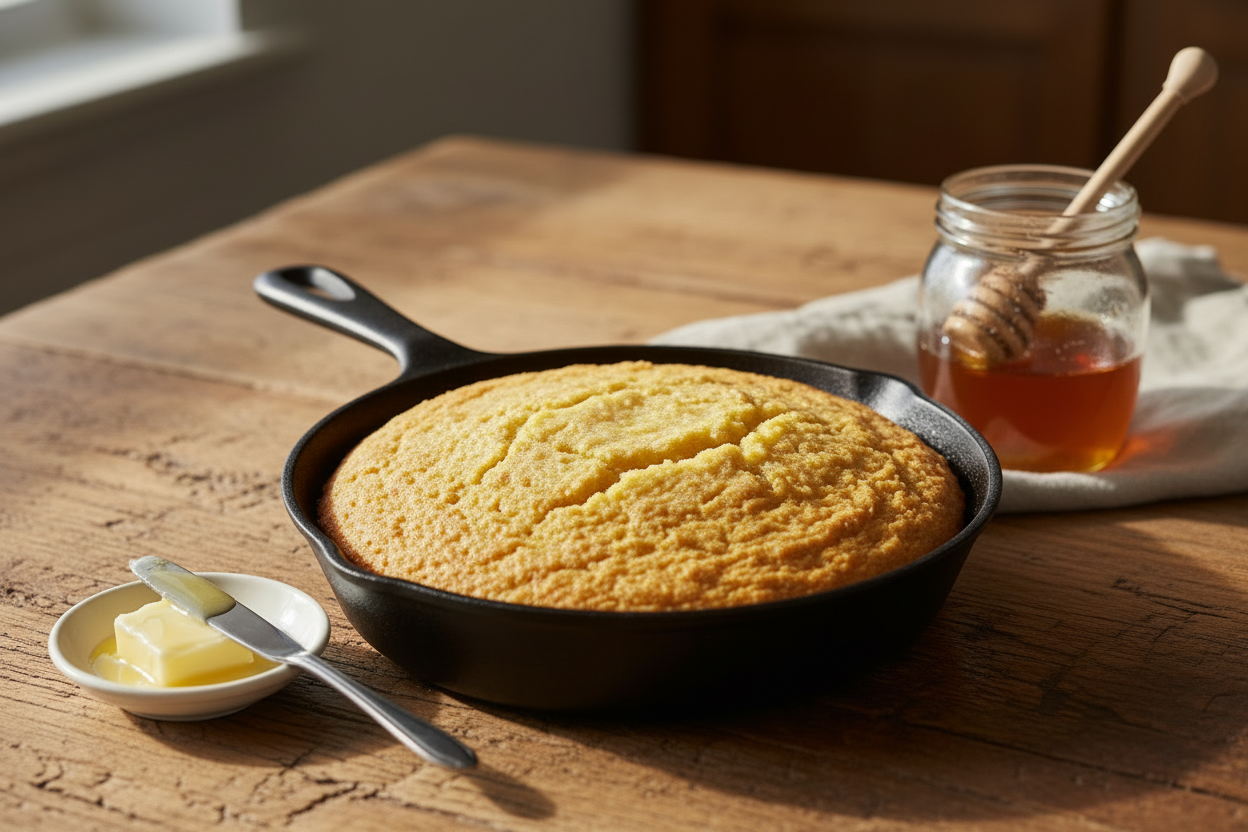
Stone-ground cornmeal, full-fat buttermilk, bacon drippings, and a screaming hot cast iron skillet. The result is golden, slightly crispy on the outside, tender inside, and worth eating on its own with butter and honey — or cubed up and left to stale for the best dressing you'll ever make.
The bread is only as good as the cornmeal. Use stone-ground. Falls Mill in Middle Tennessee makes some of the best available. Industrial cornmeal ground at high speeds on metal overheats, loses flavor, and turns the oils rancid faster. Stone-ground tastes like corn. The difference is immediate.
Why This Works
Hydrating a portion of the cornmeal with boiling water before mixing gelatinizes the starch and produces a more tender moist crumb. Cornbread skipped this step tends to be drier and more crumbly regardless of how much buttermilk goes in.
A hot cast iron skillet with bacon fat or butter already in it when the batter hits produces an immediate sizzle that sets a crispy bottom crust before the cornbread even goes in the oven. That crust is what separates cast iron cornbread from everything else.
450°F is the right temperature. Lower heat produces pale cornbread that doesn't develop the golden crust. High heat sets the exterior fast and lets the interior cook through while the outside stays crisp.
Full-fat buttermilk reacts with the baking soda to produce carbon dioxide lift and adds a slight tang that makes the cornbread taste like something beyond just corn and flour.
Seasoning freshness is the most overlooked part of a cooking. Most of what's in your cabinet was ground over a year ago — the flavor's already gone, and nothing on the jar tells you when it was made. Every Lucky Cajun bag is stamped with the date it was ground. Nobody else in the US does that. Browse our fresh ground blends→ Satisfaction guaranteed.
Ingredients
- 1 cup stone-ground cornmeal plus ⅓ cup separated
- 1 cup all-purpose flour
- 1 tsp fresh ground Lucky Cajun Jalapeno
- 1 tsp baking powder
- ¼ tsp baking soda
- ⅓ cup rapidly boiling water
- ¾ cup full-fat buttermilk
- 1 large egg, beaten
- 2 tsp bacon drippings or butter, plus more for the pan
Instructions
1. Preheat and Heat the Skillet
Preheat oven to 450°F. Place an 8-inch cast iron skillet in the oven with bacon fat or butter to heat while you mix the batter. The skillet needs to be hot when the batter goes in.
2. Hydrate the Cornmeal
Put ⅓ cup stone-ground cornmeal in a bowl. Pour boiling water over it, whisk to combine, and let sit 10 minutes. This step is what produces the tender crumb that makes this cornbread worth making.
3. Mix Dry Ingredients
In a separate bowl mix the remaining cornmeal, flour, salt, baking powder, and baking soda.
4. Combine
Stir buttermilk and beaten egg into the hydrated cornmeal until combined. Fold this wet mixture into the dry ingredients until just combined. Do not overmix — a few lumps are fine. Overmixed cornbread is tough.
5. Bake
Carefully pour the batter into the hot cast iron skillet. It should sizzle immediately. Bake for 20 minutes until deeply golden on top and set through the center.
Let cool slightly before cutting. Serve warm with butter and honey.
Two Ways to Use It
Eat it now — warm from the skillet with butter and honey. This is the version that makes people ask for the recipe before they've finished the first piece.
Make it into dressing — cut into cubes and let stale overnight or dry in a low oven for a few hours. Stone-ground cornbread produces the best dressing base available — rich corn flavor that holds up through a long bake in seasoned stock without turning to mush.
Variations
Cajun cornbread: Add 1 teaspoon of Lucky Cajun Black Label to the dry ingredients. The savory Cajun depth pairs naturally with the slight sweetness of the stone-ground corn and makes this cornbread work alongside soups, stews, and gumbo.
Jalapeño cheddar cornbread: Fold in diced fresh jalapeño and shredded sharp cheddar before baking. The cheese melts into pockets throughout the crumb and the jalapeño adds heat that builds with every bite.
Bacon cornbread: Fold crumbled crispy bacon into the batter. The bacon fat in the skillet plus bacon in the batter is as good as it sounds.
Sweet version: Add 2 tablespoons of honey or sorghum to the wet ingredients for a slightly sweeter cornbread that pairs beautifully with butter and works well as a dressing base when you want a hint of sweetness in the finished dish.
FAQ
What is stone-ground cornmeal and why does it matter?
Stone-ground cornmeal is ground slowly between stones at low temperatures that preserve the natural oils and flavor of the corn. Industrial cornmeal is ground at high speeds on metal that overheats the grain, destroys flavor, and turns the oils rancid faster. The flavor difference is significant and immediate.
Why hydrate the cornmeal before mixing?
Pouring boiling water over a portion of the cornmeal gelatinizes the starch before it goes into the batter. This produces a more tender moist crumb without additional liquid. Cornbread made without this step tends to be drier and more crumbly.
Why use a hot cast iron skillet?
A hot skillet with fat in it produces an immediate sizzle when the batter hits that sets a crispy bottom crust before the cornbread goes in the oven. That crust is what makes cast iron cornbread different from cornbread baked in a cold pan.
Why bake at 450°F?
High heat sets the exterior quickly and produces the golden crust that makes cornbread worth eating. Lower temperatures produce pale cornbread without the crust that defines the dish.
Can I use regular cornmeal instead of stone-ground?
Yes but the flavor and texture will be noticeably different. Stone-ground cornmeal produces a more complex corn flavor and a slightly more textured crumb. Regular industrial cornmeal produces a finer blander result.
What is the best fat for cornbread?
Bacon drippings produce the most flavor — the rendered pork fat adds a savory depth that butter alone doesn't have. Butter works well and produces a cleaner flavor. Both are significantly better than vegetable oil which adds nothing.
Why use full-fat buttermilk?
Full-fat buttermilk reacts with the baking soda to produce lift and adds a slight tang that makes the cornbread taste more complex. Low-fat buttermilk produces a thinner batter and a less tender result.
Can I make cornbread without a cast iron skillet?
Yes. An 8-inch cake pan or baking dish works. Grease it generously and preheat it in the oven before adding the batter. The bottom crust won't be quite as crispy as cast iron but the cornbread will still be excellent.
How do I dry cornbread for dressing?
Cut the cooled cornbread into 1-inch cubes. Spread on a baking sheet and place in a 200°F oven for 1 to 2 hours until completely dry. Or leave the cubes out overnight uncovered at room temperature. Fully dried cornbread absorbs stock evenly without turning to mush in the dressing.
What is Falls Mill cornmeal?
Falls Mill is a historic water-powered grist mill in Middle Tennessee that produces stone-ground cornmeal and grits using traditional milling methods. One of the best sources available — find it at farmers markets, specialty grocery stores, or online.
Why Lucky Cajun
A pinch of Lucky Cajun Black Label in cornbread adds savory Cajun depth that makes the bread work alongside gumbo, red beans, and holiday mains without overpowering the natural corn flavor. Fresh ground seasoning distributed evenly through the dry ingredients produces consistent flavor in every piece. Every Lucky Cajun bag ships with a Born-On Date so you know the seasoning is still working when it matters.
🌶️ Shop Lucky Cajun Black Label
🌶️ Shop Lucky Cajun Salt-Free Original
🌶️ Shop the Holiday Survival Kit
Stone-ground cornmeal. Hot cast iron. Bacon drippings. 450°F. Don't overmix.
That's Southern cornbread done right. 🌶️