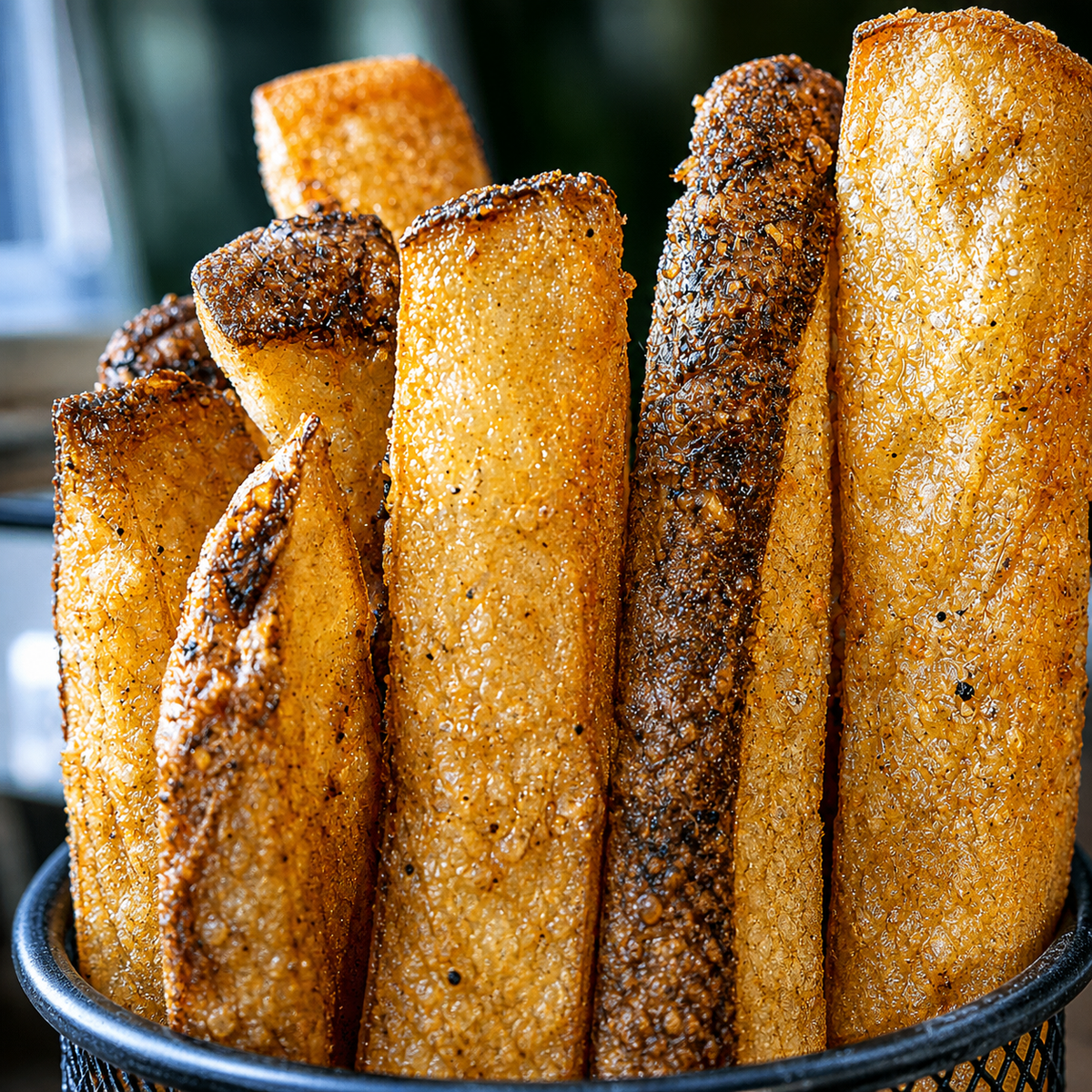
How to Make Crispy Fries at Home (The Double-Fry Method That Actually Works)
Great fries don't come from a trick. They come from doing every step on purpose.
Restaurants don't get crispy fries by accident. They use a double-fry method because it works — but only when every stage is done correctly. Cut wrong, boil wrong, or rush the drying and the fries never crisp no matter how hot the oil is.
No hacks. No shortcuts. No soggy results.
This method explains why each step matters — not just how to copy it.
Here's the full rewrite ready to paste:
How to Make Crispy Fries at Home (The Double-Fry Method That Actually Works)
Great fries don't come from a trick. They come from doing every step on purpose.
Restaurants don't get crispy fries by accident. They use a double-fry method because it works — but only when every stage is done correctly. Cut wrong, boil wrong, or rush the drying and the fries never crisp no matter how hot the oil is.
No hacks. No shortcuts. No soggy results.
This method explains why each step matters — not just how to copy it.
Tools
The right tools make the fry process easier and more consistent.
- Staub Cast Iron Enamel Pot — https://amzn.to/4l4LhlA
- MAC Vegetable Knife — https://amzn.to/4aVI2bj
- Digital Thermometer — https://amzn.to/3NaHC9h
- Sheet Pan with Cooling Racks — https://amzn.to/4aHQ7Sj
- Wire Fry Spider — https://amzn.to/4cqrqek
Contains affiliate links.
The Real Problem With Bad Fries
Most bad fries fail long before they ever touch hot oil.
Common mistakes:
- Uneven cuts that cook inconsistently
- Skipping or overdoing the parboil
- Frying wet potatoes that steam instead of crisp
- Rushing straight to high heat
- Not letting fries cool between fries
Miss one step and the crunch never shows up.
The Double-Fry Method — Why It Works
Every stage builds toward the final texture. Each one solves a specific problem.
Uniform cut — about ⅓ inch
Even thickness means even cooking. Thick and thin fries in the same batch guarantee uneven results.
Short parboil
This softens the interior so the inside turns fluffy instead of dense. Too long and the fries fall apart. Too short and the center stays raw.
Fully dry the potatoes
Moisture creates steam. Steam kills crispness. Dry potatoes fry. Wet ones don't. This step is non-negotiable.
Low-temperature first fry — around 225°F
This builds structure. The fries cook through without browning and form a shell that can later crisp. This is the step most home cooks skip — and why their fries never crunch.
Cooling period
After the first fry fries go back on a rack and cool completely. This sets the structure. Frying them warm traps steam and softens the exterior.
High-temperature second fry — around 375°F
This is where the crunch happens. Because everything before was done right the fries crisp instead of absorbing oil.
Miss any of these steps and the second fry can't save you.
Why Cooling Matters More Than People Think
Cooling is not optional.
Warm fries going back into hot oil release steam from the inside out. That steam softens the exterior and prevents proper browning. Cooling lets moisture redistribute and escape so the second fry can do its job.
Restaurants build this pause into their workflow for a reason.
The Finish — Where Fries Are Won or Lost
The last minute matters more than most people realize.
- Don't overcrowd the fryer — oil temperature must stay hot
- Pull fries when they float and look deeply golden
- Drain quickly
- Season immediately while the surface oil is still hot
- Don't let fries sit in oil or puddle in a bowl
Oil steals seasoning. Speed matters here. Serve right away. Fries don't wait.
Which Lucky Cajun Blend to Use
Fries are one of the best ways to test a seasoning. They're simple, neutral, and have a lot of surface area — you get instant feedback on balance, salt level, and heat.
Classic Cajun fries: Lucky Cajun Black Label — bold, smoky, and balanced. The go-to for any protein and the perfect finish for a crispy fry.
Spicy fries: Lucky Cajun Voodoo — habanero heat with depth. Season immediately out of the oil for maximum cling.
Salt-free version: Lucky Cajun Salt-Free Original — same fresh-ground flavor without the added sodium. Works perfectly on fries where you control the salt separately.
Heat seeker fries: Lucky Cajun Fiery Datil — citrus forward with serious heat. Unexpected on fries. Unforgettable.
If a seasoning works on fries it usually works everywhere else. Let the fries tell you what you like.
FAQ
What is the double-fry method for fries?
The double-fry method involves frying potatoes twice — first at low temperature around 225°F to cook the interior and build structure, then at high temperature around 375°F to crisp the exterior.
Why do restaurant fries taste better than homemade?
Restaurants use the double-fry method, control oil temperature precisely, and season immediately after frying. Most home cooks skip one or more of these steps.
Why aren't my fries getting crispy?
Usually because the potatoes weren't dried properly before frying, the oil wasn't hot enough, or the fries weren't cooled between fries.
Do you have to parboil fries before frying?
Yes. A short parboil softens the interior so the inside turns fluffy instead of dense during frying.
Why do you need to cool fries between frying?
Warm fries release steam when they hit hot oil a second time. That steam softens the exterior and prevents the crust from forming. Cooling first lets the second fry do its job.
What oil is best for frying french fries?
Neutral oils with high smoke points work best — peanut oil, canola oil, or vegetable oil. Avoid olive oil which burns at frying temperatures.
When should you season fries?
Season immediately after pulling from the oil while the surface is still hot and slightly oily. The seasoning adheres best at this moment. Waiting even a minute reduces how much sticks.
What is the best seasoning for homemade fries?
Fresh ground seasoning without fillers gives you the most even coverage and the cleanest flavor. Lucky Cajun Black Label is built for this — bold enough to stand up to the fry without overpowering it.
Can you make crispy fries in an air fryer?
Yes but the double-fry method still applies. First fry at low temperature, cool, then air fry at high temperature for the second pass.
Why Lucky Cajun
Fresh ground seasoning has a window. Season the moment the fries come out of the oil and the volatile oils in the blend bloom on contact. That's flavor that sticks. Every Lucky Cajun bag ships with a Born-On Date so you know the seasoning is still alive when it matters.
🌶️ Shop Lucky Cajun Black Label
🌶️ Shop Lucky Cajun Voodoo
🌶️ Shop the Heat Seeker Bundle
Crispy fries aren't about luck. They're about discipline.
Respect the cut. Respect the boil. Respect the dry. Respect the fry — twice.
Do every step right and the crunch shows up exactly when it should. 🌶️