Tri Tip Recipe — Cast Iron Oven Method, Temperature Guide, Horseradish Sauce
Tri tip gets ruined for three reasons every time — under-seasoning, overcooking, and slicing it wrong. You can fix two of those and still end up with tough meat if you miss the third.
This cast iron and oven method fixes all three.
The Problem With Tri Tip
Tri tip is a triangular muscle from the bottom sirloin that cooks unevenly by design. One end is thicker while the other tapers thinner. That's why cooking by internal temperature instead of guessing time produces better results every time.
Time is guidance. Temperature is truth.
Ingredients
- Medium-size tri tip roast
- Fresh ground Lucky Cajun Muy Thai seasoning — season heavy
- Butter for pan
- Horseradish sauce for serving
Fix #1 — Season Boldly
Tri tip is thick and needs aggressive seasoning. A light dusting won't penetrate. Season heavily on all sides, rest uncovered in the refrigerator for 1 hour, then remove and rest 30 minutes at room temperature. Taking the chill off helps the meat cook evenly.
This is where fresh ground seasoning does real work. Crack open Muy Thai and it hits you immediately — bright, aromatic, still alive, nothing dusty about it. A thick roast like tri tip demands seasoning that can actually penetrate and hold up through a sear and a slow roast; a stale blend that's already lost its volatile oils just sits on the surface and burns off, leaving you with color but no real flavor underneath the crust.
Fix #2 — Cook by Temperature, Not Time
Cast Iron + Oven Method:
- Heat cast iron skillet over medium-high heat
- Sear tri tip until browned on first side
- Flip once
- Transfer skillet to 300°F oven
- Roast about 20 minutes, then begin checking temperature
- Check every 5 minutes
Target Internal Temperatures:
| Doneness | Pull At | Finish After Rest |
|---|---|---|
| Rare | 120–125°F | 125–130°F |
| Medium-Rare | 130–135°F | 135–140°F |
| Medium | 140–145°F | 145–150°F |
| Medium-Well | 150–155°F | 155–160°F |
Medium-rare is the sweet spot. The uneven shape means the thick end stays rarer while the thin end cooks further — so everyone at the table gets the doneness they want from one roast. That's exactly how tri tip should eat.
Resting: Rest 5 minutes in the pan then 10 minutes on the cutting board. Juices redistribute while temperature rises slightly. Do not skip this.
Fix #3 — Slice Against the Grain
This is where most tri tips fail. You can nail the seasoning and temperature and still ruin it here.
The grain changes direction across the roast. Identify the grain direction before you cut, adjust your slicing angle as it shifts, and always cut against it. Thin slices, against the grain. Non-negotiable.
Horseradish Sauce
The best sauce for tri tip is one that cuts through the richness of the beef without overpowering it.
Ingredients:
- ⅓ cup mayo
- ⅓ cup sour cream
- 5–10 dashes Worcestershire sauce
- 1–2 tablespoons prepared horseradish
- A few dashes hot sauce
Mix until smooth. Serve over sliced tri tip.
The Skillet Remix
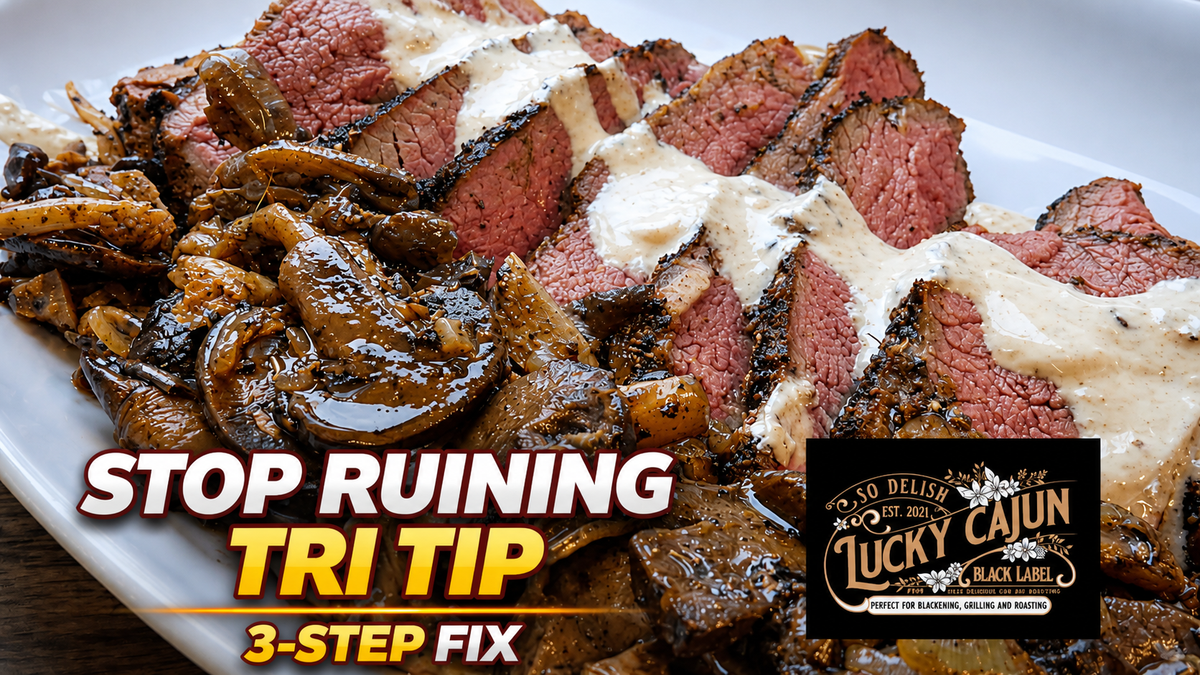
Don't waste the pan. The browned bits and drippings left in the cast iron are where the depth comes from. Add a splash of stock or wine, scrape up the fond, and toss in sautéed mushrooms right in that same skillet — the residual seasoning and beef drippings turn a basic mushroom sauté into something that tastes like it belongs on a steakhouse plate. The full skillet remix — building a pan sauce from what's left — is shown in the video above.
FAQ
What temperature is tri tip done?
Pull at 130–135°F for medium-rare, which finishes around 135–140°F after resting. Rare is 120–125°F, medium is 140–145°F, and medium-well is 150–155°F pulled temperature. Always cook by temperature, not time — tri tip's uneven shape makes time alone unreliable.
What is the best way to cook tri tip?
A cast iron sear followed by a low oven finish is one of the most reliable methods — it gets a deep crust from the sear and even, gentle cooking from the oven. This oven roasted tri tip method also naturally produces a range of doneness across the roast because of its uneven shape, which is a feature, not a flaw.
Can I cook tri tip in a cast iron skillet?
Yes — it's ideal. Cast iron holds high heat for a proper sear and then transfers straight into the oven for the roasting phase, so you're using one pan for the whole cook and capturing all the drippings for a pan sauce afterward.
How long does it take to cook tri tip in the oven?
About 20 minutes at 300°F after the initial sear, then check internal temperature every 5 minutes until it hits your target. Total time varies by size and desired doneness, so temperature — not the clock — is what actually tells you it's done.
What is the best seasoning for tri tip?
A fresh ground blend with real aromatic depth, applied heavy since the roast is thick. Muy Thai works because its volatile oils are still active — they bloom during the sear and hold their flavor through the oven finish instead of burning off into nothing.
How do you slice tri tip?
Against the grain, in thin slices. The tricky part is that the grain direction changes across the roast, so you have to identify it and adjust your cutting angle as you work across the meat. Cutting with the grain instead of against it is the single biggest reason tri tip turns out chewy.
What sauce goes with tri tip?
A horseradish-based sauce — mayo, sour cream, Worcestershire, horseradish, and a few dashes of hot sauce — cuts through the richness of the beef without competing with it. It's the classic tri tip sauce pairing for good reason.
Can I grill tri tip instead of using cast iron?
Yes. Sear it hot and direct, then move it to indirect heat to finish to temperature, using the same target internal temps as the oven method. Grilled tri tip picks up smoke flavor the cast iron version doesn't, so it's a genuinely different but equally good direction.
What is Santa Maria tri tip?
The original California style of tri tip — seasoned simply with salt, pepper, and garlic, then grilled over red oak wood. It's the tradition this cut comes from, and the temperature and grain-slicing principles here apply the same way whether you're doing it Santa Maria style or this cast iron oven version.
How do you make homemade horseradish sauce?
Whisk together mayo, sour cream, Worcestershire, prepared horseradish, and a few dashes of hot sauce until smooth. Taste and adjust the horseradish to your preferred sharpness — it's a five-minute sauce with no cooking required.
Can I marinate tri tip overnight?
Yes, though this recipe leans on a dry seasoning rub instead of a wet marinade since tri tip's flavor comes through better with a bold dry application. If you do marinate, keep it in the fridge overnight and pat the meat dry before searing so you still get a proper crust.
What is a good sautéed mushrooms recipe to go with this?
Slice mushrooms and cook them in the same cast iron skillet used for the tri tip, right in the leftover drippings and fond. A splash of stock or wine to deglaze, a pat of butter, and they pick up all the residual seasoning — turning basic mushrooms into a genuine steakhouse-style side with almost no extra effort.
Why Lucky Cajun
A roast this thick needs seasoning that can actually stand up to a heavy application and a two-stage cook. Fresh ground Muy Thai — still carrying its volatile oils, still smelling alive the moment the bag opens — blooms during the sear and holds its depth through the oven finish. Stale, warehouse-ground seasoning just can't do that; it's spent by the time it reaches your kitchen.