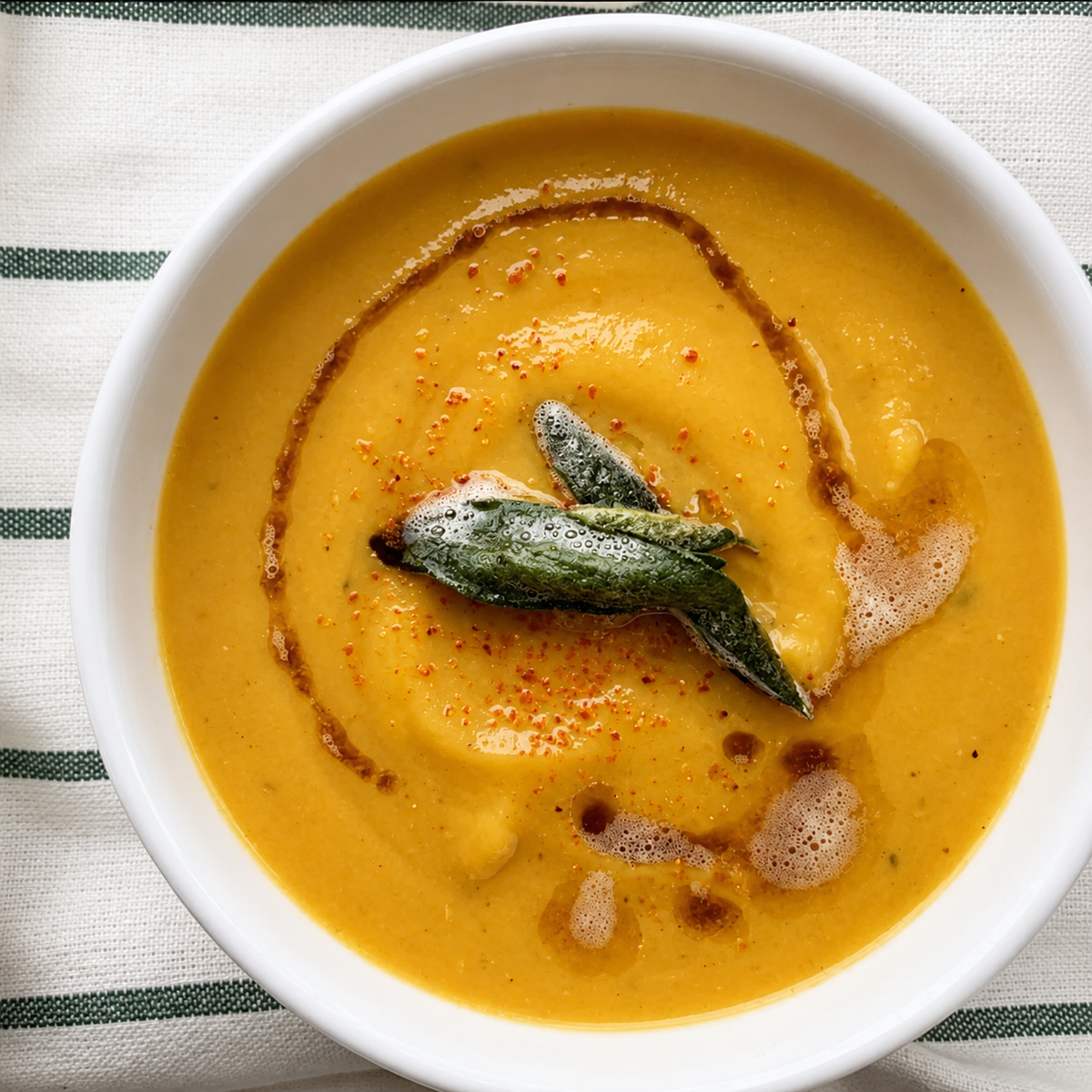
Butternut squash soup has a reputation for being one-note. Sweet, orange, and forgettable. This roasted butternut squash soup is different because of two things — roasting and brown butter.
Roasting the squash, onion, and garlic together at 375°F before they ever touch a pot transforms the flavor. The natural sugars caramelize, the edges get toasty, and the garlic mellows into something sweet and deep. You're not boiling vegetables into submission — you're building flavor before the soup even starts. That's the difference between a forgettable butternut squash soup recipe and one people actually remember.
Then the brown butter sage sauce. Half a stick of butter taken just past melted, just past foamy, to that toasty golden moment where the milk solids turn nutty and the fresh sage crisps in the fat. Drizzled over the finished soup it adds a richness and aroma that makes this feel restaurant-worthy without the restaurant effort — the exact reason it's the fall soup recipe worth putting on repeat all season.
Why This Works
Lucky Cajun Black Label goes in at three points — on the vegetables before roasting, into the soup while it simmers, and into the brown butter at the end. That layering is what gives the whole bowl depth.
Crack the bag open and it hits you immediately — bright paprika and cracked pepper, still alive. That freshness matters most at the third addition: dropped into browning butter, fresh ground seasoning blooms instantly, filling the kitchen with an aroma that's honestly the whole reason you made this soup. A stale, pre-ground blend just sits in the fat and does nothing at that critical final moment — it's the layer that makes or breaks the finish.
Ingredients
- 1 large butternut squash
- 1 large onion
- 1 whole bulb garlic, peeled
- 2 tablespoons olive oil
- 1 tablespoon fresh ground Lucky Cajun Black Label seasoning
- 1½ cups heavy cream or coconut milk
- 3 cups homemade or salt-free store-bought stock
- ½ stick unsalted butter
- Fresh sage leaves
Instructions
1. Roast the Vegetables
Preheat oven to 375°F. Cut the butternut squash in half lengthwise and scoop out the seeds — set them aside to roast separately if you want a crunchy garnish. Rough-cut the peeled onion and split the garlic bulb. Toss squash, onion, and garlic in olive oil and Black Label. Spread on a baking sheet and roast 35 to 45 minutes until sweet, tender, and caramelized at the edges. This is how you roast butternut squash for soup properly — deep color at the edges is the flavor signal you're looking for.
2. Build the Soup
Peel the skin off the roasted squash. Transfer all the roasted vegetables to a large pot. Add cream or coconut milk and 3 cups of stock. Simmer over low heat until warmed through, then blend smooth with a stick blender. Too thick — add more stock. Too thin — simmer until it tightens. Taste and adjust Black Label seasoning but don't overdo it here — more is coming in the brown butter.
3. Make the Brown Butter Sage Sauce
In a medium stainless steel pan heat half a stick of unsalted butter over medium heat. Watch it closely — it goes from perfect to burned fast. Once it starts to brown add a handful of fresh sage leaves and a few pinches of fresh ground Black Label. The leaves will crisp in seconds once the butter's hot enough — that's your crispy sage. The aroma at this point is the whole reason you made this soup. If it burns start over with lower heat. If it's not browning increase the heat slightly.
4. Serve
Ladle the soup into bowls. Drizzle the brown butter sage sauce over the top — don't stir it in, let it pool on the surface. Serve with fresh bread and eat immediately.
Tips
Save the squash seeds. Toss them in olive oil and Black Label and roast at 375°F until crispy — about 15 minutes. They make a perfect garnish and a great snack.
Coconut milk makes this completely dairy-free without losing any of the creaminess. Use it if you're cooking for someone who can't do dairy — they won't miss the cream.
FAQ
What makes roasted butternut squash soup better than boiled?
Roasting caramelizes the natural sugars in the squash and onion and mellows the garlic into something sweet and deep before anything hits liquid. Boiling raw vegetables produces a flatter, more one-note soup — roasting builds real flavor into the vegetables themselves instead of diluting it into water.
Can I use frozen butternut squash?
Yes, though fresh gives better caramelization since frozen squash releases more moisture. If using frozen, roast it a little longer and expect slightly less browning at the edges — the flavor will still be good, just a touch less deep than fresh.
What is brown butter and how do you make it?
Butter cooked past melted and past foamy, until the milk solids turn golden brown and the butter smells nutty. Watch it closely over medium heat — the window between perfect and burned is short. If it burns, start over at a lower heat.
How do you make crispy sage?
Drop fresh sage leaves into butter once it's actively browning — the residual heat crisps the leaves in seconds. Pull the pan off the heat as soon as they turn a slightly darker green and go crisp; they burn fast if left in too long.
Can I add coconut milk to butternut squash soup?
Yes — swap it in for the heavy cream at a 1:1 ratio. It keeps the same creamy texture without any dairy, and most people can't tell the difference once the soup is blended smooth.
Is this soup freezer friendly?
Yes. The soup base freezes well for up to 3 months in an airtight container — leave the brown butter sage sauce out and make it fresh when you reheat and serve, since it doesn't freeze or reheat the same way.
What do you serve with butternut squash soup?
Crusty fresh bread for dipping is the classic pairing. A simple green salad with a sharp vinaigrette also balances the richness of the cream and brown butter nicely.
Can I make this in a slow cooker or Instant Pot?
The roasting step is what builds the deep flavor here, so it's worth doing in the oven first even if you finish the soup elsewhere. Once roasted, you can transfer everything to a slow cooker on low for an hour or an Instant Pot on the soup setting to warm through before blending — but skipping the roast entirely will get you back to that one-note flavor this recipe is built to avoid.
How do you roast butternut squash for soup?
Halve it, scoop the seeds, toss it with olive oil and Black Label along with rough-cut onion and a split garlic bulb, and roast at 375°F for 35 to 45 minutes until fork-tender and caramelized at the edges. That caramelization is the entire foundation of the soup's flavor.
What seasoning is best for butternut squash soup?
A fresh ground, savory Cajun blend without sugar or fillers. Black Label works because it adds real depth — smoked paprika, garlic, and cracked pepper — without turning the soup sweet or masking the natural squash flavor.
Why does the seasoning go in three times?
Layering Black Label at roasting, simmering, and in the brown butter builds seasoning through every stage of the dish instead of relying on one flat addition. Each layer picks up a different job — the roast builds a base crust, the simmer seasons the body of the soup, and the brown butter delivers the final aromatic hit right before serving.
Can I use the squash seeds for anything?
Yes — don't throw them out. Toss them in olive oil and Black Label and roast at 375°F for about 15 minutes until crispy. They make an excellent crunchy garnish or a stand-alone snack.
Why Lucky Cajun
Lucky Cajun Black Label is fresh ground weekly in Tennessee with a Born-On Date on every pouch. In a dish where the seasoning gets added three separate times, freshness compounds — each addition blooms on contact instead of sitting flat, which is exactly what turns a one-note squash soup into something layered and worth making again all fall.