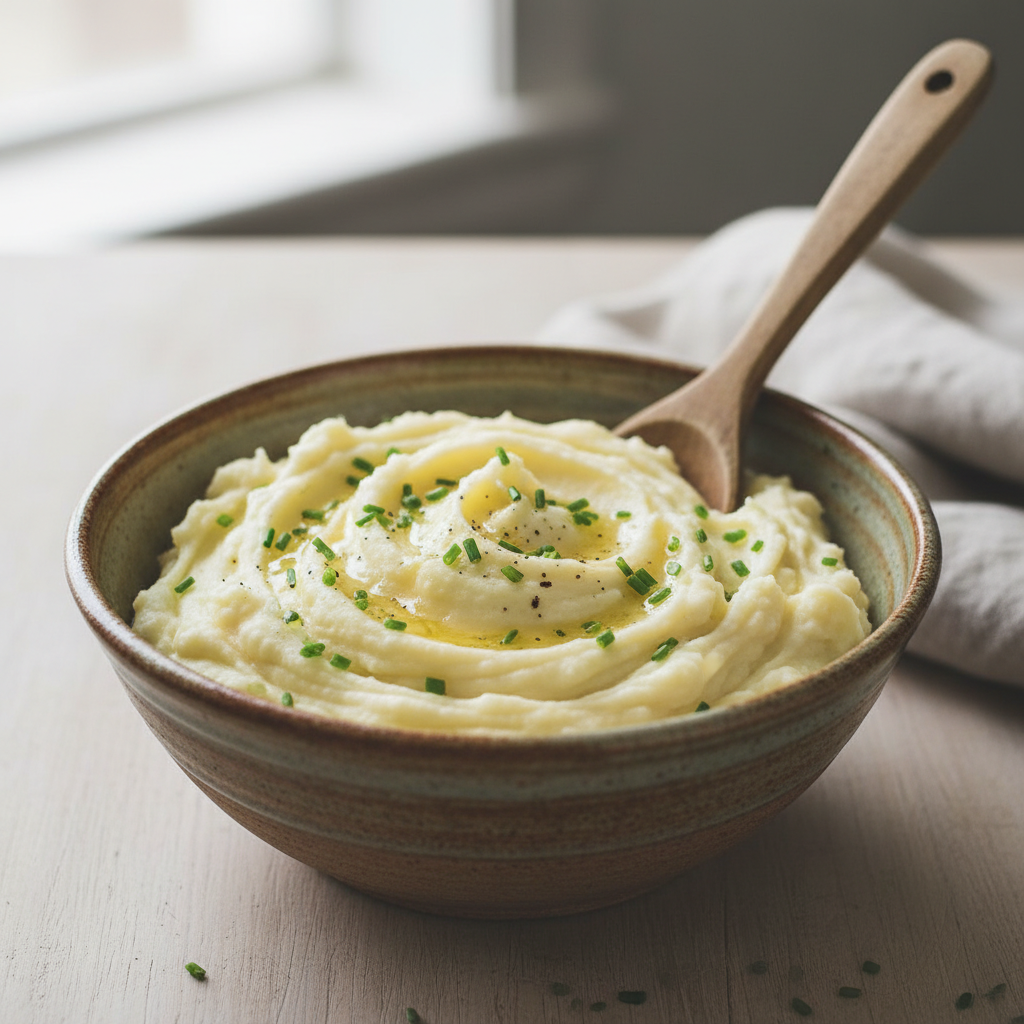
Most mashed potatoes are either gluey, lumpy, or bland. All three problems come from the same place — wrong technique, wrong potato, or cold liquid added at the wrong time.
This method fixes all three. Light, fluffy, and properly seasoned from the first bite. The ricer is the tool that changes everything. Once you use it you won't go back.
Why This Works
Yukon Gold or Idaho russets are the right potatoes. Waxy potatoes don't break down properly and produce a dense gluey mash no amount of butter can fix.
Starting in cold salted water instead of boiling water produces more even cooking from the outside in. Dropping potatoes into boiling water cooks the outside faster than the inside and produces uneven texture.
Not peeling before boiling prevents excess water absorption. Potatoes peeled before boiling absorb water during the cook and produce a watery mash that never comes together properly.
Ricing while hot is the most important step. Hot potatoes rice smoothly and fluffy. Cooled potatoes compact and turn gluey when forced through the ricer.
Warm liquid is non-negotiable. Cold milk or butter added to hot potatoes drops the temperature and produces a dense heavy mash. Warm milk and butter incorporate smoothly and produce the light creamy texture worth eating.
Seasoning freshness is the most overlooked part of cooking. Most of what's in your cabinet was ground over a year ago — the flavor's already gone, and nothing on the jar tells you when it was made. Every Lucky Cajun bag is stamped with the date it was ground. Nobody else in the US does that. Browse the fresh ground seasoning collections → Satisfaction guaranteed.
Ingredients
- ½ pound potato per person — Yukon Gold or Idaho russets
- Whole milk, warmed
- Butter, warmed
- Salt to taste
Instructions
1. Choose and Clean the Potatoes
Use Yukon Gold, Idaho russets, or similar starchy potatoes. Avoid waxy varieties. Clean thoroughly but do not peel.
2. Cook in Cold Salted Water
Place whole unpeeled potatoes in a pot of cold salted water. Make sure they're fully covered. Bring slowly to a boil over medium heat maintaining a gentle boil throughout.
Test for doneness by piercing with a butter knife — it should slide through easily with no resistance. This usually takes 25 to 35 minutes depending on size.
3. Drain and Dry
Drain the potatoes completely. Let them sit in the colander for a few minutes to steam dry — excess moisture produces a watery mash.
4. Peel While Hot
Peel the potatoes while still hot using kitchen towels to hold them and a butter knife to scrape the skin. The skin comes off easily when hot. This step is fast once you get the motion down.
5. Rice While Hot
Pass the peeled potatoes through a potato ricer immediately while still hot. The ricer produces light fluffy strands that incorporate smoothly. Do not use a food processor or blender — they overwork the starch and produce a gluey paste.
6. Add Warm Liquid
While ricing have milk and butter warming separately on the side. Whisk the warm milk and butter into the riced potatoes gradually until creamy and smooth. Add liquid slowly — you can always add more but you can't take it out.
Taste and season with salt. Adjust until the flavor is right.
Four Flavor Variations
Herbed:
Add crème fraîche, white pepper, fresh dill, and chives. Bright, aromatic, and unexpected on a holiday table.
Cheesy Bacon:
Mix in sharp cheddar, crispy bacon, and sliced green onions. The version people request at every cookout and every holiday.
Savory Rich:
Replace milk with chicken stock or turkey pan drippings instead of milk — or simply add more butter for ultimate richness. The pan dripping version made with Bird Doctor turkey drippings is one of the best things on the Thanksgiving table.
Gruyère Horseradish:
Stir in Gruyère cheese and prepared horseradish to taste. Bold, sharp, and built for standing up to rich gravies and bold proteins.
The Leftover Play
Leftover mashed potatoes have two excellent second lives.
Potato cakes — shape cold mashed potatoes into patties and sear in butter over medium-high heat until golden and crispy on both sides. Serve with sour cream or the dill horseradish sauce from the holiday cookbook.
Potato soup — thin leftover mashed potatoes with turkey stock, add a handful of cheese, and simmer gently until smooth. Season with Lucky Cajun Black Label. One of the fastest soups you'll make all season.
FAQ
What is the best potato for mashed potatoes?
Yukon Gold or Idaho russets. Both are starchy enough to produce a light fluffy mash. Waxy potatoes like red potatoes or fingerlings don't break down properly and produce a dense gluey texture.
Why start potatoes in cold water instead of boiling water?
Starting in cold water produces more even cooking from the outside in. Dropping potatoes into boiling water cooks the outside faster than the inside and produces uneven texture.
Why use a ricer for mashed potatoes?
A ricer produces light fluffy strands without overworking the starch. Food processors and blenders overwork the starch and produce a gluey paste no amount of butter can fix.
Why does the liquid need to be warm?
Cold liquid added to hot potatoes drops the temperature and produces a dense heavy mash. Warm milk and butter incorporate smoothly and maintain the light fluffy texture produced by the ricer.
Why not peel potatoes before boiling?
Unpeeled potatoes absorb less water during cooking. Peeled potatoes absorb water through the exposed flesh and produce a waterlogged mash that never comes together properly.
What is the best Cajun seasoning for mashed potatoes?
Fresh ground Lucky Cajun Black Label adds savory depth that carries through every bite without overpowering the potato. A pinch in the warm milk before it goes into the potatoes distributes evenly and builds flavor from the inside out.
Can I make mashed potatoes ahead of time?
Yes. Keep warm in a slow cooker on the lowest setting with a pat of butter on top. Stir occasionally and add a splash of warm milk if they thicken too much. Don't make them too far in advance — mashed potatoes are best within an hour of making.
Why are my mashed potatoes gluey?
Either the wrong potato variety, overworking the starch with a food processor or blender, or adding cold liquid. Use a ricer, use starchy potatoes, and add warm liquid gradually.
What is the best fat for mashed potatoes?
Butter is the foundation. Heavy cream produces a richer result than whole milk. Turkey pan drippings in place of some of the butter add a roasted savory depth that pairs perfectly with holiday mains. Crème fraîche adds a slight tang that brightens the whole dish.
How much potato per person for mashed potatoes?
Half a pound per person is more than enough for a side dish serving. Scale up slightly if mashed potatoes are the centerpiece side or if you want guaranteed leftovers.
Why Lucky Cajun
A pinch of Black Label in warm milk before it goes into mashed potatoes distributes evenly through every spoonful and adds Cajun depth that makes people ask what's different. Fresh ground seasoning blooms into warm liquid and integrates completely. Processed blends with fillers sit in clumps and produce uneven flavor.
Every Lucky Cajun bag ships with a Born-On Date so you know the seasoning is still working when it matters.
🌶️ Shop Lucky Cajun Black Label
🌶️ Shop Lucky Cajun Salt-Free Original
🌶️ Shop the Holiday Survival Kit
Cold water start. Don't peel before boiling. Rice while hot. Add warm liquid gradually.
That's mashed potatoes done right. 🌶️