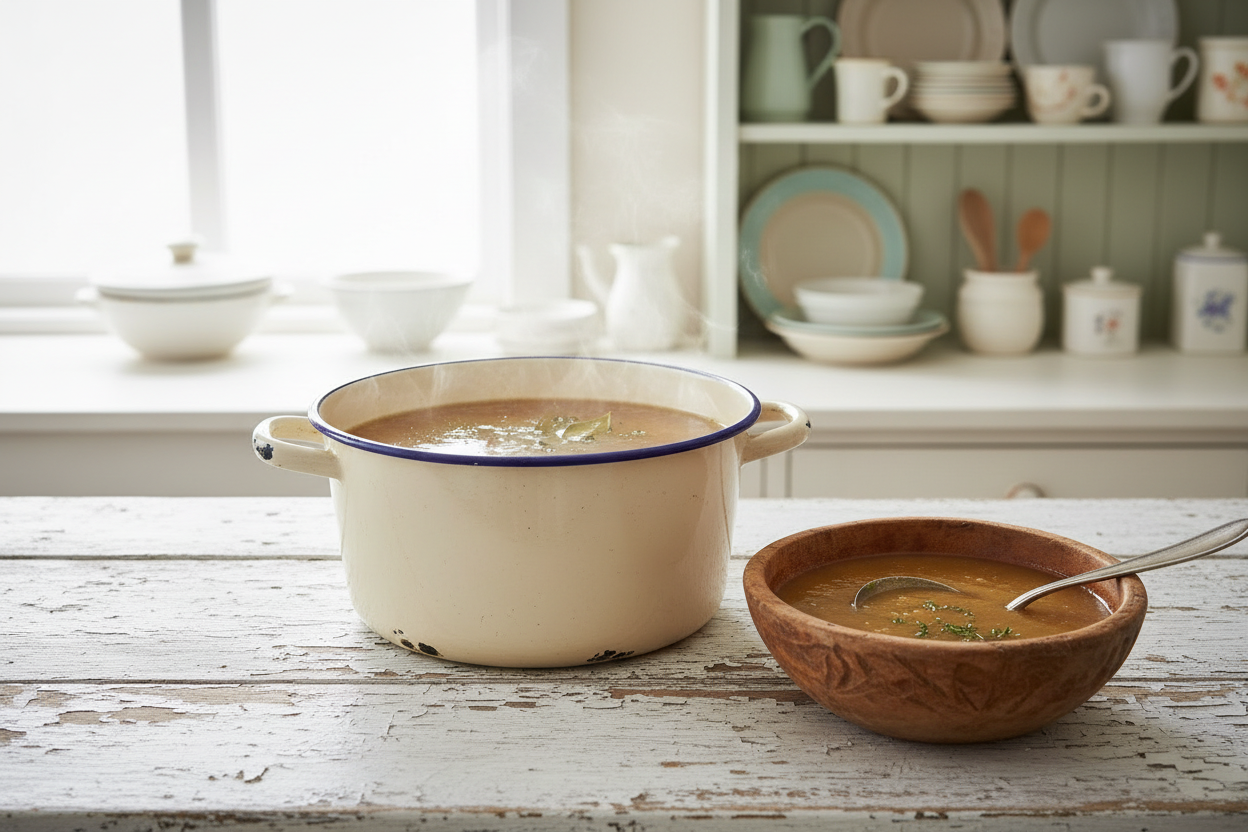
Most holiday gravies taste like they came from a packet. That's because they did — or because the stock underneath them was made from a bouillon cube and tap water.
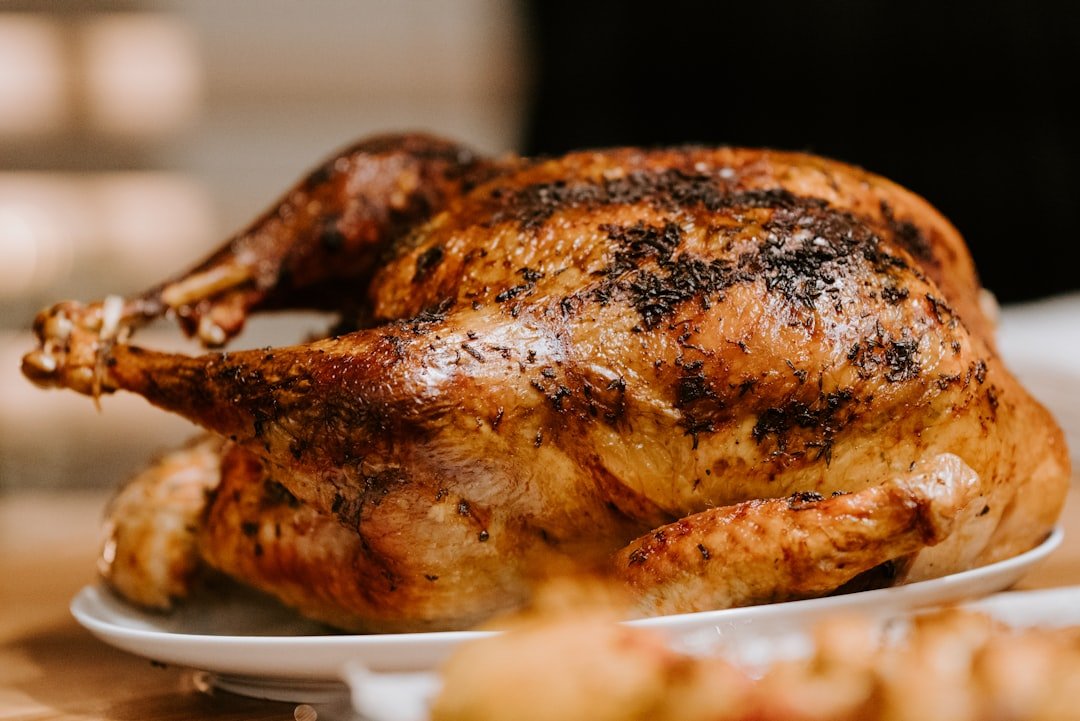
Real gravy starts with real stock. And real stock starts with the turkey carcass you were about to throw away.
This guide covers everything — how to make turkey stock from the roasted carcass, the roux vs slurry debate, how to build gravy with real depth, and every variation worth making. Lucky Cajun Black Label seasons both the stock and the finished gravy so the Cajun flavor runs all the way through.
Why Homemade Stock Changes Everything
Store-bought stock is convenient. It's also flat, salty, and missing the gelatin that makes a great gravy silky instead of thin.
When you simmer a roasted turkey carcass low and slow the collagen in the bones and cartilage melts into the liquid and produces a stock with body, richness, and that silky mouthfeel that separates real gravy from everything else.
The roasting pan also has browned bits stuck to it after the turkey comes out — pure flavor gold. A little water, some gentle heat, and a flat wooden spoon releases all of it into the stock.
That's what separates good from unforgettable.
Seasoning freshness is the most overlooked part of cooking. Most of what's in your cabinet was ground over a year ago — the flavor's already gone, and nothing on the jar tells you when it was made. Every Lucky Cajun bag is stamped with the date it was ground. Nobody else in the US does that. Browse the fresh ground seasoning collections → Satisfaction guaranteed.
Homemade Turkey Stock
Ingredients:
- Bones and carcass from 1 roasted turkey
- 2 large carrots, chopped
- 1 onion, chopped
- 1 celery stalk, chopped
- 1 bay leaf
- Fresh thyme sprigs
- Fresh parsley sprigs
- Water to cover
Instructions:
1. Roast the Bones and Vegetables
Preheat oven and spread the turkey carcass, cartilage, and any remaining bones on a roasting pan with the carrots, onion, and celery. Roast until deeply browned — almost burnt. That deep caramelization is where the flavor lives.
2. Transfer to Stock Pot
Place roasted bones and vegetables in a large pot. Add bay leaf, thyme, and parsley. Cover with water — don't stress about exact measurements. If the pot can't hold it all get a bigger one.
3. Scrape the Roasting Pan
Pour a little water into the roasting pan. Hold a towel over it for safety and gently heat over low. Use a flat wooden spoon to scrape up every browned bit stuck to the bottom. Add this liquid to the stock pot — it's what separates good stock from unforgettable stock.
4. Simmer Low and Slow
Bring to a gentle simmer. Do not boil — just let it bubble quietly. Cook until the joints and cartilage dissolve completely. This is what gives the gravy its richness and silky mouthfeel.
5. Strain and Store
Strain out all solids. Use immediately or refrigerate for up to 5 days. Freeze for up to 3 months.
How to Make Turkey Gravy
Step 1 — Reduce the Stock
Start with your strained turkey stock. Reduce it by half over a gentle simmer. Taste it. Rich and deeply flavored? If not keep reducing. This concentrates the flavor and gives the gravy body and depth before any thickener goes in.
Step 2 — Choose Your Thickener
Option 1 — Roux
Roux is flour cooked in fat — butter, oil, or pan drippings — that thickens the gravy while adding flavor. The longer it cooks the deeper and more complex the flavor. But it requires attention. Left unattended it burns fast and becomes bitter with no way back.
How to make it:
- Measure equal parts fat and flour by weight
- Melt the fat over medium heat then whisk in the flour slowly until smooth
- Stir constantly with a flat whisk or wooden spoon — keep it moving
- Cook to your desired color:
- Blond roux — 3 to 5 minutes, light tan, mild flavor
- Brown roux — 10 to 15 minutes, deep nutty brown, rich flavor
- Dark roux — 20+ minutes, chocolatey, intense flavor
Once the roux reaches your desired color slowly whisk it into the reduced stock one spoonful at a time until the gravy reaches the thickness you want.
Option 2 — Slurry
Quick and easy. Mix flour or cornstarch with a little cold water until completely smooth. Slowly whisk into simmering stock. For a raw flour slurry simmer a few extra minutes to cook out the raw flour taste.
Step 3 — Determine Quantity
About 16 oz of stock makes enough gravy for 8 servings. Whisk in your thickener gradually, simmering and tasting until perfect.
Step 4 — Season
Taste frequently. Adjust with fresh ground Lucky Cajun Black Label, salt, and freshly cracked black pepper. The Black Label adds Cajun depth that carries through every spoonful without announcing itself.
Step 5 — Take It to the Next Level
Once the gravy is thick and properly seasoned the variations are endless:
- Sautéed mushrooms for earthy depth
- Tasso, bacon, or andouille for Cajun richness
- Splash of sherry or brandy for depth
- Fresh sage for holiday aroma
- Turkey giblets for rich meaty complexity
- Pan drippings from the roasted bird for unbeatable roasted flavor
The Pan Dripping Gravy
If you roasted your turkey properly the pan underneath it has collected hours worth of basted drippings and rendered fat. That liquid is the most flavorful thing in your kitchen on Thanksgiving day.
Pour the drippings into a fat separator or measuring cup. Skim most of the fat off the top — save it for the roux. Use the dark liquid underneath as your stock base for the gravy.
Pan dripping gravy made from a Bird Doctor brined turkey needs almost no additional seasoning. The brine flavor that ran through the bird during roasting has concentrated in those drippings.
Leftover Stock Strategy
The turkey stock you make from the carcass doesn't have to stop at gravy.
Use it for:
- Turkey and Andouille Gumbo — the leftover recipe worth planning the whole meal around
- Red beans and rice the following Monday
- Soup base for the rest of the week
- Basting liquid for leftover turkey reheated in the oven
- Moistening the dressing while it reheats
One turkey carcass produces enough stock for days of cooking. Don't throw it away.
FAQ
Why make homemade turkey stock instead of using store-bought?
Homemade turkey stock has gelatin from the bones and cartilage that produces a silky body store-bought stock can't replicate. It also has the roasted flavor from the carcass and pan drippings that makes gravy taste like it came from a real kitchen instead of a packet.
How long does it take to make turkey stock?
At minimum 2 to 3 hours of gentle simmering after the bones are roasted. Longer produces deeper more concentrated flavor. Most cooks simmer turkey stock for 4 to 6 hours.
What is the difference between a roux and a slurry for gravy?
A roux is flour cooked in fat before the stock is added — it builds flavor during cooking and produces a richer more complex gravy. A slurry is raw flour or cornstarch mixed with cold water and whisked in at the end — faster and easier but less flavorful.
Why reduce the stock before making gravy?
Reduction concentrates the flavor and gives the gravy natural body before any thickener is added. Gravy made from unreduced stock tastes thin and flat even when properly thickened.
What is the best Cajun seasoning for turkey gravy?
Lucky Cajun Black Label adds savory depth that carries through every spoonful without overpowering the natural turkey flavor. Fresh ground seasoning blooms into a hot liquid and distributes evenly through the gravy. Processed blends with fillers produce a flat result.
Can I make turkey gravy ahead of time?
Yes. Make the stock and reduce it the day before. Make the gravy the morning of Thanksgiving and reheat gently before serving. Add a splash of stock to loosen if it thickens too much during storage.
Why scrape the roasting pan for stock?
The browned bits stuck to the bottom of the roasting pan are concentrated flavor from hours of basting and roasting. Deglazing the pan with a little water over low heat releases all of it into the stock. This is the step that separates good stock from unforgettable stock.
How do I fix lumpy gravy?
Strain it through a fine mesh strainer. Lumps come from adding thickener too fast or not whisking constantly. Prevent them by adding roux or slurry slowly while whisking continuously.
How do I fix thin gravy?
Either reduce it longer over gentle heat or whisk in a small additional slurry of cornstarch and cold water. Add slowly and simmer after each addition until the right consistency is reached.
How do I fix gravy that is too thick?
Add warm turkey stock a little at a time, whisking between additions, until it reaches the right consistency.
What is the best seasoning for homemade gravy?
Lucky Cajun Black Label for savory Cajun depth. Lucky Cajun Salt-Free Original if the stock is already heavily seasoned from a Bird Doctor brine. Fresh cracked black pepper and a splash of sherry finish it. Taste constantly and adjust as you go.
Why Lucky Cajun
Great gravy starts with great stock and great stock starts with bones that were seasoned properly before they went in the oven. A Bird Doctor brined turkey produces a carcass and pan drippings that are already deeply flavored before stock-making begins. Lucky Cajun Black Label in the finished gravy adds the Cajun depth that makes people ask what's in it.
Every Lucky Cajun bag ships with a Born-On Date so you know the seasoning is still working when it goes into the stock.
🌶️ Shop Lucky Cajun Black Label
🌶️ Shop Lucky Cajun Salt-Free Original
🌶️ Shop the Holiday Survival Kit
Roast the bones dark. Scrape the pan. Simmer low and slow. Reduce before thickening. Season with Black Label.
That's turkey stock and gravy done right. 🌶️