Grilling fish is something most people love to eat and hesitate to make. It feels easy to mess up — the fillet sticks, falls apart, or dries out, and suddenly you've ruined good fish on a hot grill.
Here's the truth: grilling fish is almost foolproof once you understand a few simple things. Nearly every problem comes from three mistakes — moisture, hesitation, or moving the fish too soon. Fix those three and you'll grill fish with confidence every time.
Seasoning freshness is the most overlooked part of a grilling flavorful seafood. Most of what's in your cabinet was ground over a year ago — the flavor's already gone, and nothing on the jar tells you when it was made. Every Lucky Cajun bag is stamped with the date it was ground. Nobody else in the US does that. [Browse the fresh ground Seafood seasoning collection →] Satisfaction guaranteed.
It Starts With Quality
Before technique matters, fish quality does. Fresh fish grills better — it holds together and releases from the grates more easily. Old fish falls apart and sticks no matter how good your technique is.
Fresh fish smells like the ocean, clean and briny. The flesh is firm and moist. If you're starting with quality fish, everything that follows gets easier.
Preparation
Dry the fish thoroughly. This is the most important step. Moisture cools the grill and prevents searing — it steams the fish and makes it stick. Pat it completely dry with kitchen towels before it goes anywhere near the grate.
Season and oil just before cooking. Salt draws out moisture if applied too early. Even 15 minutes of sitting salted can pull enough moisture to hurt the sear. Season right before the fish hits the grill.
Skip the marinades. Extra moisture and sugar make grilling harder — they increase sticking and cause flare-ups. Save marinades for baking. For grilling, keep the surface dry and season with fresh ground Lucky Cajun seasoning right before cooking.
Brush lightly with oil. You want coverage, not puddles. Too much oil causes flare-ups. A light even coat is all you need.
Grill Setup
Clean grates are essential. Scrub with a wire brush before and after cooking. Fish sticks to dirty grates. If you don't have a brush, roll aluminum foil into a ball and scrub the grates using tongs.
Oil the grates lightly. Use a silicone brush or a folded towel held with tongs. A light coat of oil on hot clean grates is your best defense against sticking.
Get the temperature right — 375 to 450°F. Here's the simple test: if oil doesn't smoke, the grill isn't hot enough. If it catches fire immediately, it's too hot. Thin fish benefits from higher heat to set quickly. Thicker fish needs a cooler zone to finish without burning the outside.
The Right Tools
Standard rolled steel grates work fine, but thicker forged grates are easier to cook on. You don't need a new grill — replacement grates or accessories do the job.
Other tools that make grilling fish easier:
- Fish cages for whole fish or large fillets — they keep everything intact
- Heavy grill toppers sized to your grill for shrimp and smaller pieces
- A metal fish spatula for fillets — tongs are fine for thick steaks but tear delicate fish
Cooking the Fish — The One Rule That Matters Most
Once the fish goes on the grill, leave it alone.
This is where nearly everyone messes up. The instinct is to peek, poke, and move it. Don't. The fish will release naturally once it's properly seared. If it's sticking to the grate, it's not ready to flip. When it's ready, it lets go on its own.
Skin-on fish: Always start skin-side down. Focus your cooking there to get the skin crisp. Crispy skin is one of the best parts of grilled fish and it holds the fillet together.
Don't leave it on too long. Overcooked fish flakes apart and falls through the grates when you lift it. There's a window — seared and set but not overdone.
Flip once, deliberately, and finish. One confident flip. Not several nervous ones.
Shrimp are forgiving. Skewer small shrimp so they don't fall through and are easy to flip all at once. Soak wooden skewers first so they don't burn. Large shrimp may not need skewers depending on your grate spacing.
Temperature and Timing
Pull fish from the heat at 135 to 140°F internal temperature. As it rests, the temperature rises naturally to around 145°F — finishing the cook without drying the flesh.
Don't repeatedly probe the fish with a thermometer. Each puncture breaks the structure and can make the fish difficult to handle. Check once, trust the carryover heat, and let it rest.
Reading Doneness by Eye
Fish begins to flake slightly when it's ready. But don't let that flaking run through the entire piece — that's overcooked. You want the edges just starting to flake while the center stays together.
The fish tells you when it's done. Learn to read it and you won't need the thermometer as often.
Practice Without Risk
If you want to build confidence before risking good fish on a live grill, use a cast iron grill pan on the stove. Follow all the same steps at slightly lower heat. It's a low-stakes way to learn the feel — when the fish releases, how it looks when it's ready, how the flip should go.
Variations With Lucky Cajun Blends
Blackened grilled fish: Season aggressively with fresh ground Lucky Cajun Black Label or Blackened Scorpion before grilling over high heat for a Louisiana-style char.
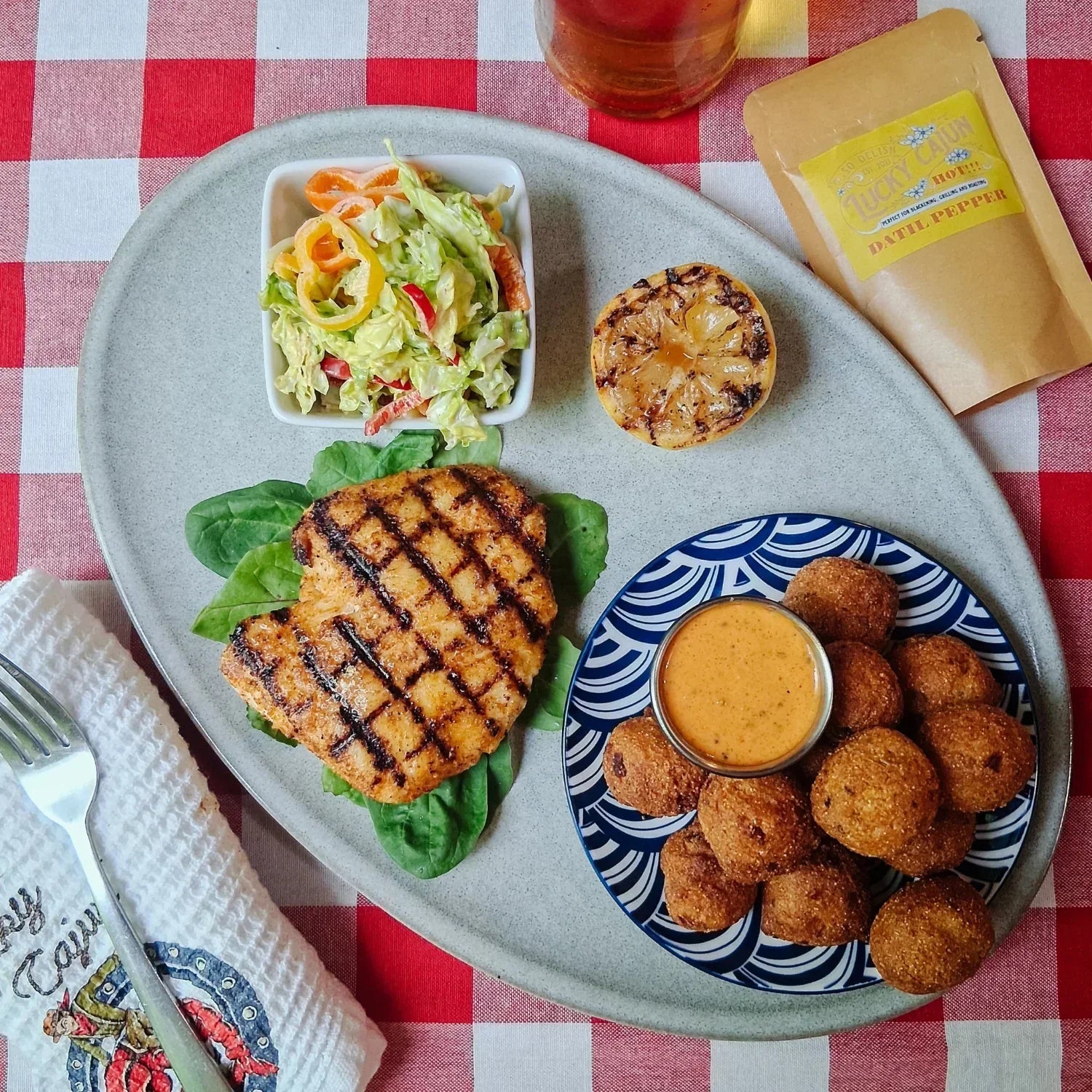
Lemon herb grilled fish: Lucky Cajun Lucky Lemon Dilly Pepper right before grilling, finished with a squeeze of grilled lemon.
Jerk grilled fish: Lucky Cajun What A Jerk or Total Jerk for a Caribbean profile — outstanding on firm fish like snapper and mahi.
Salt-free grilled fish: Lucky Cajun Salt-Free Original for full Cajun flavor without the salt drawing out moisture before the fish hits the grate.
FAQ
How do you keep fish from sticking to the grill?
Clean the grates thoroughly, oil them lightly, get the grill hot (375 to 450°F), dry the fish completely, and — most importantly — leave the fish alone once it's on. Fish releases from the grate naturally when it's properly seared. If it sticks, it's not ready to flip.
What temperature should you grill fish at?
375 to 450°F. If oil doesn't smoke on the grate, it's not hot enough. If it catches fire immediately, it's too hot. Thin fish does better at higher heat to set quickly; thicker fish needs a slightly cooler zone to finish without burning.
How do you know when grilled fish is done?
Pull it at 135 to 140°F internal — carryover heat brings it to 145°F as it rests. By eye, the edges just begin to flake while the center holds together. If flaking runs all the way through, it's overcooked.
Should you grill fish skin-side down first?
Yes. Always start skin-on fish skin-side down and focus your cooking there to crisp the skin. The crispy skin tastes great and holds the fillet together on the grill.
Why shouldn't you marinate fish before grilling?
Marinades add moisture and sugar that make grilling harder — more sticking, more flare-ups. Keep the surface dry and season with fresh ground seasoning right before grilling instead. Save marinades for baking.
What is the best fish for grilling?
Firmer fish holds up best — salmon, snapper, mahi, swordfish, tuna, grouper. Delicate flaky fish is harder but doable with a fish cage. Beginners should start with a firm fillet or steak.
Do you need to flip fish on the grill?
Yes, once. Flip deliberately when the fish releases naturally from the grate. Multiple nervous flips are how fillets fall apart. One confident flip and finish.
How do you grill shrimp without losing them through the grates?
Skewer smaller shrimp — soak wooden skewers first so they don't burn — or use a heavy grill topper. Large shrimp may hold on the grate depending on spacing.
What is the best seasoning for grilled fish?
A fresh ground sugar-free blend applied right before cooking. Lucky Cajun Black Label for bold Cajun flavor, Lucky Lemon Dilly Pepper for a bright citrus profile, or What A Jerk for Caribbean heat. Fresh ground seasoning blooms on the sear; stale warehouse seasoning doesn't.
How can I practice grilling fish without ruining it?
Use a cast iron grill pan on the stove at slightly lower heat, following the same steps. It's a low-risk way to learn when the fish releases and how it looks when it's ready before you cook on a live grill.
Why Lucky Cajun
Grilling means seasoning right before the fish hits the heat — no marinade to carry flavor in. That makes the seasoning's freshness matter even more. Fresh ground Lucky Cajun with a Born-On Date on every bag blooms the instant it hits the hot grate and builds a real crust. Stale warehouse seasoning just sits there. On the grill, fresh ground is the difference between a seared crust with flavor and a pale one without.
🌶️ Shop Lucky Cajun Black Label
🌶️ Shop Lucky Cajun Lucky Lemon Dilly Pepper
🌶️ Shop Lucky Cajun What A Jerk
🌶️ Explore the Seafood Sauce Library
Dry the fish. Hot clean grates. Season right before. Leave it alone. Flip once.
That's grilled fish done right. 🌶️