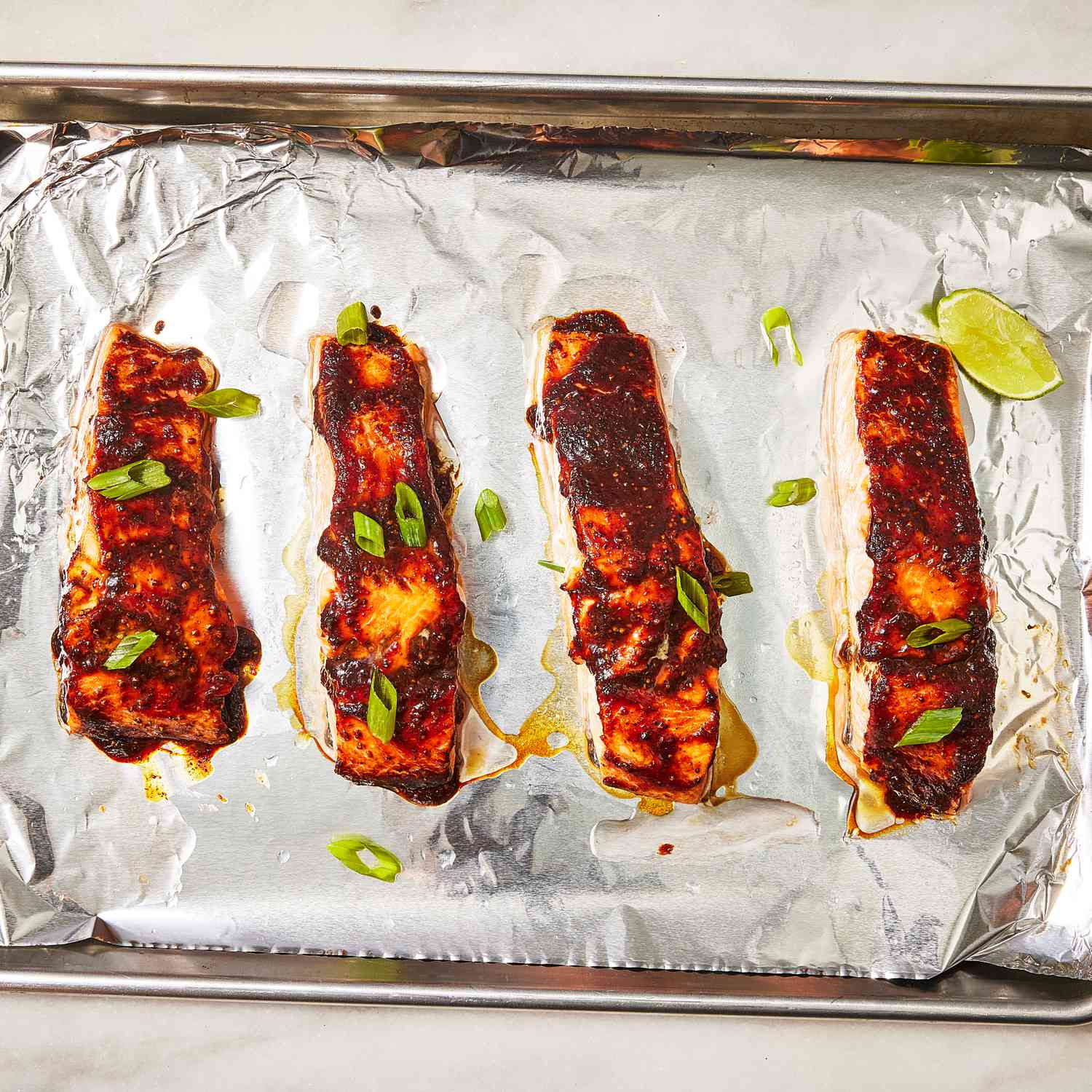

Romesco is one of those sauces that rewards doing the work. Roasting your own peppers, garlic, and tomatoes instead of opening cans makes a genuine difference here. Shortcuts flatten the sauce. This is one of those places where the extra 30 minutes pays off in the bowl.
Why This Works
Charring the peppers completely over an open flame develops a smoky sweetness that raw or jarred peppers can't replicate. The steaming step after charring loosens the skin and allows it to peel away cleanly while the flesh stays tender and juicy.
Roasting the tomatoes and garlic together until lightly charred concentrates their flavor and adds a caramelized depth that raw versions don't have. The roasty bits captured on the pan liner go into the food processor — don't lose them.
Marcona almonds add a buttery richness that regular almonds lack. They're worth finding.
Smoked paprika adds the backbone of the sauce's color and smoky depth. Sherry vinegar adds the acid that keeps everything bright. Fresh ground Lucky Cajun Black Label (← See the Blend) adds Cajun depth underneath the Spanish spice profile without competing with it — crack the bag open and it's sharp and alive, still carrying the paprika and pepper aroma that a warehouse-aged blend loses long before it reaches your kitchen.
Seasoning freshness is the most overlooked part of cooking. Most of what's in your cabinet was ground over a year ago — the flavor's already gone, and nothing on the jar tells you when it was made. Every Lucky Cajun bag is stamped with the date it was ground. Nobody else in the US does that.
Browse the fresh ground Seafood collection (← Shop Now) — Satisfaction guaranteed.
Step 1 — Roast the Tomatoes and Garlic
- 1 cup cherry tomatoes
- 5 large garlic cloves, unpeeled
- Olive oil
Toss tomatoes and garlic with olive oil. Roast at 350°F for 20 to 30 minutes until the tomatoes release their juices and everything is lightly charred and concentrated.
A silicone pan liner helps capture the roasty bits — keep them. They go into the food processor.
The garlic doesn't need to be fully soft. If it isn't completely tender that's fine — it will still be sweeter than raw and will blend smoothly.
Step 2 — Char the Peppers
- 2 large red bell peppers
Char the peppers completely over an open flame, grill, or gas burner until the skins are fully blistered and blackened all over. The flesh should remain tender and juicy inside.
Place the charred peppers in a zip-top bag, seal, and let steam until cool enough to handle. Peel off most of the skin — about 90% clean is perfect. Remove seeds and stems. Save any juice that collects in the bag.
Step 3 — Build the Sauce
Place the following in a food processor:
- Roasted tomatoes and garlic squeezed from their skins
- Roasted red peppers and any saved juice
- ½ cup Marcona almonds
- 1 tablespoon smoked paprika
- 1 teaspoon fresh ground Lucky Cajun Black Label (← Add to Cart)
- Dash of hot sauce
- ½ cup extra-virgin olive oil
- ¼ cup sherry vinegar
Purée until smooth. A little texture is fine — romesco doesn't need to be perfectly silky. Taste and adjust — more vinegar for brightness, more paprika for depth, more hot sauce for heat.
Black Label ⭐⭐⭐⭐⭐
"I love my Lucky Cajun spices!!! I use the Black Label in almost everything, it is soooo delicious! Really, they are all so good I can't choose a favorite. I highly recommend. If you haven't tried these you NEED to right away, you can't go wrong!!!" — Kathryn Gibson
What Do You Serve Romesco Sauce With
- Spoon over grilled or pan-seared fish just before serving
- Apply to skinless fish after flipping and finish in the oven — the sauce reduces into a glaze during the final minutes of baking
- Serve alongside bread for dipping
- Spoon over roasted vegetables
- Use as a sandwich spread
- Toss with pasta for a quick romesco pasta
- Serve alongside grilled chicken or lamb
One important note — do not apply romesco to the skin side of fish. It will turn soggy. Use skinless fish or finish with the skin side down.
Variations
Spicier version: Add a pinch of fresh ground Lucky Cajun Fiery Datil (← Try This Blend) alongside the Black Label for a fruity citrusy heat that pairs beautifully with the smoky paprika base.
Datil ⭐⭐⭐⭐⭐
"This is my new favourite. The flavour is well balanced and the heat level is enough to give you a bit of a kick, but not so hot that it masks all the complex spices included in this blend. Soooo good!!" — Jill Cole
Deeper smoke: Add a pinch of Lucky Cajun Black Beard's Smoke (← See the Blend) for additional chipotle depth that amplifies the smoked paprika.
Nut swap: Hazelnuts in place of Marcona almonds produce a slightly more bitter, earthier result. Toasted pine nuts produce a more delicate sauce.
Vinegar swap: Red wine vinegar in place of sherry vinegar for a less assertive sauce.
FAQ
What is romesco sauce?
A Spanish sauce from Catalonia built on roasted red peppers, tomatoes, garlic, almonds, smoked paprika, olive oil, and sherry vinegar. Traditionally served with grilled fish and vegetables, and one of the most versatile sauces in the seafood kitchen.
What is romesco sauce made of?
Charred red peppers, roasted tomatoes and garlic, Marcona almonds, smoked paprika, sherry vinegar, olive oil, and a touch of Cajun seasoning in this version. The combination of roasted vegetables and nuts is what gives it body and depth.
How do you make romesco sauce from scratch?
Roast tomatoes and garlic until lightly charred, char red peppers completely over an open flame or grill and steam them to loosen the skins, then blend everything with Marcona almonds, smoked paprika, sherry vinegar, and olive oil until smooth. The roasting and charring steps are what separate a real romesco from a flat, shortcut version.
What do you serve romesco sauce with?
Grilled or pan-seared fish, roasted vegetables, crusty bread for dipping, grilled chicken or lamb, and even tossed through pasta. It's one of the most versatile sauces you can keep in the fridge.
What do you put romesco sauce on?
Fish is the classic pairing, especially white-fleshed varieties like snapper and halibut, but it also works beautifully spooned over roasted vegetables or spread on a sandwich.
Is romesco sauce the same as a dip?
It can function as both. Thicker romesco with a little texture works well as a romesco dip served with bread or vegetables, while a slightly looser, more blended version works better spooned over fish or tossed with pasta.
What nuts go in romesco sauce?
Marcona almonds are traditional and add a buttery richness regular almonds lack. Hazelnuts produce a more bitter, earthier version, and toasted pine nuts make for a more delicate sauce — all three are legitimate directions.
Is romesco sauce Spanish?
Yes. Romesco originates from Catalonia, Spain, traditionally made by fishermen and built around whatever roasted peppers, tomatoes, and nuts were on hand.
Can you make romesco sauce without nuts?
It's possible but changes the character significantly — the almonds or hazelnuts provide much of the sauce's body and richness. If you need a nut-free version, toasted breadcrumbs are a traditional substitute that adds body without the nuts.
How long does homemade romesco sauce keep?
Up to a week refrigerated, and the flavor actually improves over the first 24 hours as everything melds. It also freezes well in small portions for up to 3 months.
Why char the peppers completely?
Complete charring develops a smoky sweetness in the flesh that partially charred peppers don't have. The blackened skin is removed — only the tender smoky flesh goes into the sauce.
Why save the juice from the pepper bag?
The juice that collects while the peppers steam contains concentrated smoky pepper flavor. Adding it to the food processor adds depth without any extra effort.
What are Marcona almonds?
A Spanish variety of almond that is rounder, softer, and more buttery than regular almonds. Typically sold pre-roasted and salted. The buttery richness pairs naturally with the smoky pepper base of romesco. Worth finding at specialty grocery stores or online.
Can I use jarred roasted peppers instead of charring fresh ones?
Yes, but the flavor will be noticeably flatter. Jarred peppers lack the smoky depth that comes from charring over an open flame. If time is the issue, jarred peppers produce a usable sauce — just not the same sauce.
What is the best Cajun seasoning for romesco?
Fresh ground Black Label adds savory depth underneath the Spanish spice profile without competing with the smoked paprika and sherry vinegar. Fresh ground seasoning blooms into the olive oil during blending and distributes evenly through the finished sauce.
What fish works best with romesco?
White-fleshed fish — snapper, grouper, sea bass, halibut. The bold smoky sauce pairs naturally with mild fish. Salmon works but the richness of the fish competes slightly with the sauce. Shellfish, particularly scallops and shrimp, are excellent with romesco.
Why Lucky Cajun
Fresh ground Black Label blooms into the olive oil during blending and distributes evenly through the finished romesco. The volatile oils in fresh ground seasoning integrate into the fat-based sauce in a way processed blends sitting in a warehouse cannot. Every Lucky Cajun bag ships with a Born-On Date so you know the seasoning is still working when it goes into the food processor.
🌶️ Shop Lucky Cajun Black Label (← Add to Cart)
🌶️ Shop Lucky Cajun Fiery Datil (← Get It Now)
🌶️ Shop Lucky Cajun Black Beard's Smoke (← See the Blend)
🌶️ Shop the Best Sellers 4-Pack (← Shop the Bundle)
Char the peppers completely. Roast the tomatoes dark. Build the sauce in the food processor. Rest overnight.
That's romesco done right. 🌶️